
No products in the cart.
Uncategorized
The Ultimate Guide to Flame-Resistant (FR) Coveralls for Industrial Safety
21
Mar
Mar
When working in high-risk industrial environments, safety isn’t just a priority—it’s a necessity. Among the most critical pieces of personal protective equipment (PPE) are Flame-Resistant (FR) coveralls. At Safety Protection Warehouse Canada, we understand that choosing the right gear can make all the difference in worker safety and compliance.
Why Flame-Resistant (FR) Clothing Matters
FR coveralls are specifically designed to protect workers from thermal hazards, such as flash fires, electric arcs, and molten metal splashes. Unlike standard cotton or synthetic fabrics, FR materials are engineered to self-extinguish once the ignition source is removed, drastically reducing the risk of severe burn injuries.
Understanding FR Standards: NFPA 2112 and NFPA 70E
In Canada and North America, two primary standards govern the use of FR clothing:
- NFPA 2112: This standard specifies the minimum performance requirements and test methods for flame-resistant garments for protection of industrial personnel against flash fire. It ensures that the garment will not contribute to burn injury and will provide a degree of protection.
- NFPA 70E: Often associated with electrical safety, this standard addresses electrical safety requirements for employee workplaces. It defines the ‘Arc Rating’ (ATPV or Ebt) of clothing, which tells you how much heat a fabric can block before a worker would likely experience a second-degree burn.
When shopping for coveralls, ensure the labels explicitly state compliance with these standards based on your specific job hazards.
Treated vs. Inherent FR Fabrics
Understanding the difference between these two types of fabrics can help you make a better long-term investment:
- Inherent FR Fabrics: The flame-resistant properties are part of the chemical structure of the fiber itself (like Nomex or Modacrylic). These properties can never be washed or worn out.
- Treated FR Fabrics: These are usually cotton or cotton-blend fabrics that have been chemically treated to be flame-resistant. While highly effective and often more affordable and comfortable, the FR treatment can be compromised if laundered incorrectly with harsh chemicals.
Top Features to Look for in Industrial Coveralls
Not all coveralls are created equal. When selecting the best protection for your team, consider these essential features:
- Material Integrity: Look for fabrics like Bizflame or Bulwark iQ Series that offer long-lasting thermal protection.
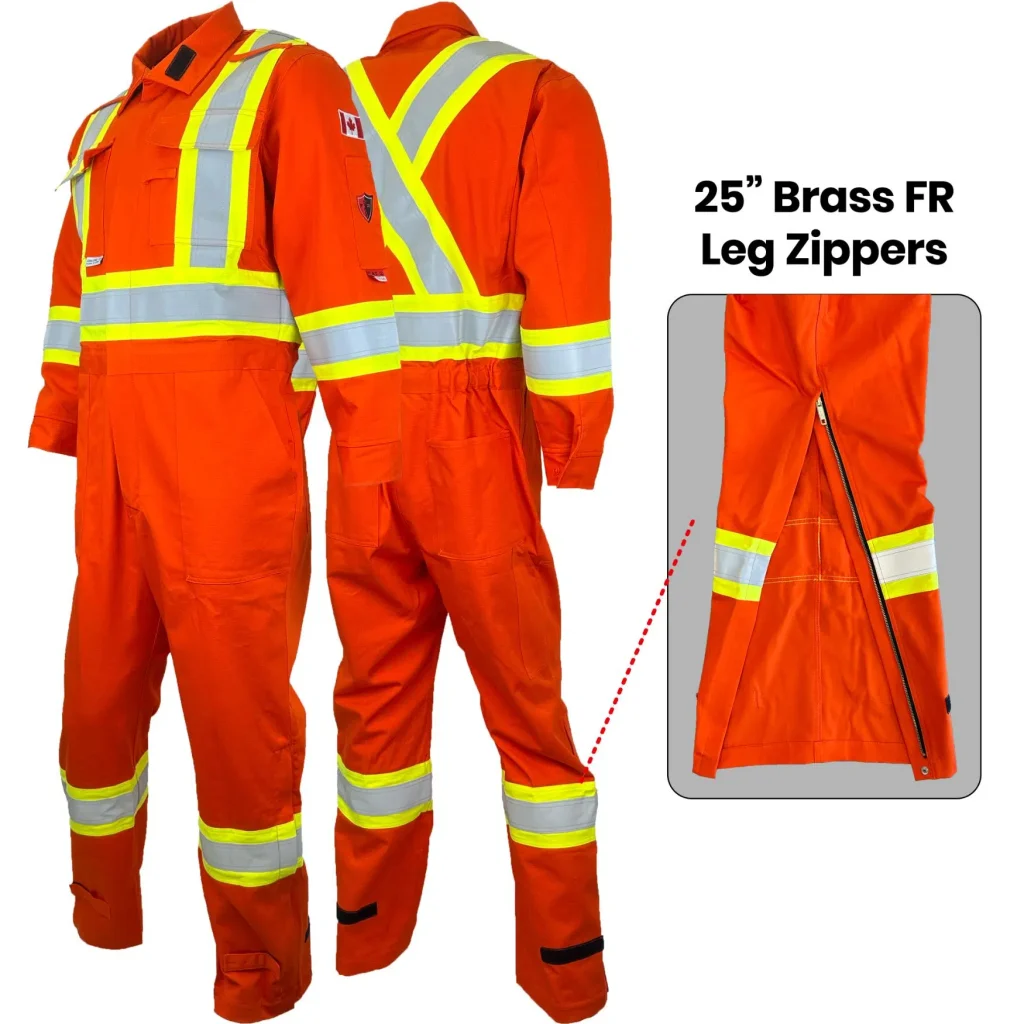
- High Visibility: Ensure your coveralls include 4-inch safety striping for low-light environments, meeting CSA Z96 standards where applicable.
- Comfort and Mobility: Lightweight, breathable materials with action backs or elasticated waists help prevent heat stress and allow for a full range of motion.
- Durability: Triple-stitched seams, reinforced pockets, and heavy-duty brass or plastic non-conductive zippers are vital for harsh environments.
Maintenance Tips for Your FR Gear
Proper care is vital to maintaining the protective properties of your FR clothing. Always follow the manufacturer’s laundering instructions. Avoid using chlorine bleach or fabric softeners, as these can coat the fibers and compromise the flame-resistant treatment or even act as a fuel source.
Regularly inspect your gear for signs of wear, such as thin spots, holes, or frayed cuffs. If the fabric is compromised, it’s time for a replacement to ensure continued safety. Remember: a hole in your FR garment is a hole in your protection.
Frequently Asked Questions (FAQ)
Q: Can I wear regular cotton clothes under my FR coveralls?
A: Yes, 100% natural fibers like cotton, silk, or wool are generally acceptable under FR gear. However, you must avoid synthetic materials like polyester, nylon, or spandex, as they can melt to your skin in the event of a thermal incident.
Q: How long do FR coveralls last?
A: The lifespan depends on the fabric type and usage. Inherent FR garments can last several years if physically intact. Treated garments typically last between 25 to 50 washes, but this varies. Always inspect the garment’s physical condition.
Q: Is it okay to use fabric softener on FR clothing?
A: No. Fabric softeners often contain flammable fats and oils that can build up on the fabric surface, potentially masking the flame-resistant properties and creating a hazard.
Conclusion
Investing in high-quality FR coveralls is an investment in your safety and the safety of your workforce. By understanding the standards, fabric types, and proper care, you ensure maximum protection in the field. Explore our extensive collection of Flame-Resistant workwear at Safety Protection Warehouse Canada today.
