
No products in the cart.
Industrial PPE, Industrial Workwear
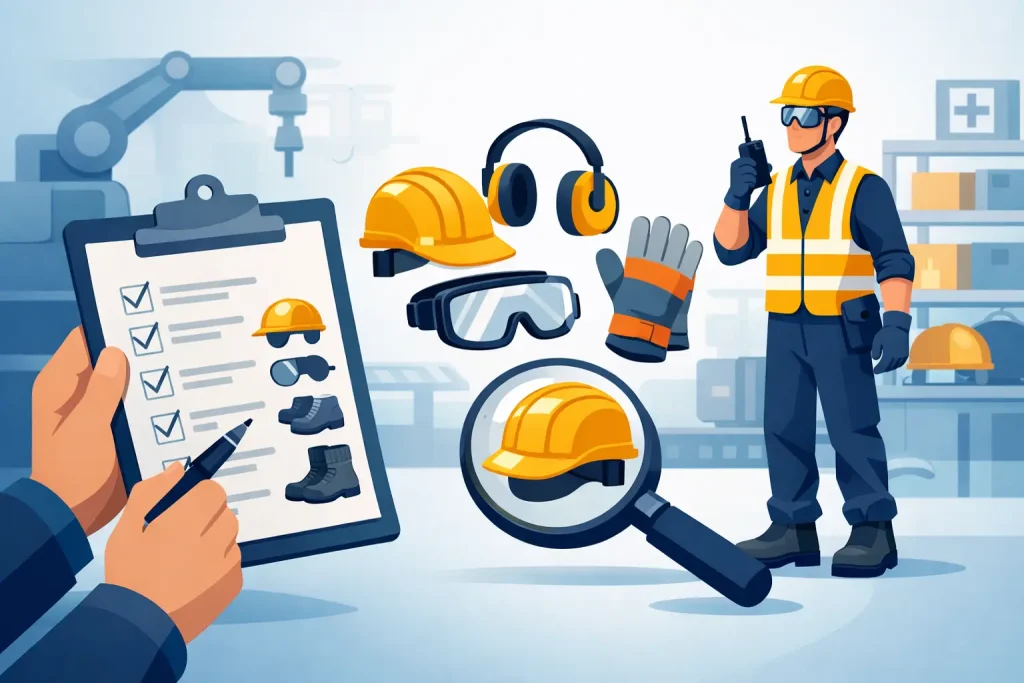
Shop Floor PPE Audit Example for Daily Checks
12
Aug
Aug
A missing face shield, a faded high-visibility vest, or an arc-rated shirt that has been contaminated with oil can turn a normal shift into an avoidable exposure. This shop floor PPE audit example gives supervisors a practical way to check what workers are wearing, whether it matches the task, and what must be corrected before work continues.
A PPE audit is not a substitute for a hazard assessment. The hazard assessment determines the protection required for each task and area. The audit verifies that the required equipment is available, worn correctly, maintained, and replaced when necessary. On a busy manufacturing floor, that distinction prevents a checklist from becoming a paper exercise.
What a Shop Floor PPE Audit Should Check
A useful audit starts with the work being performed, not with a generic bin of equipment. A worker operating a press may need eye protection, hearing protection, safety footwear, and close-fitting clothing. A maintenance electrician working on energized equipment may require arc-rated clothing and task-specific arc flash PPE under the site electrical safety program. A worker handling chemical washdown materials may need splash protection and the correct gloves for the chemical in use.
The auditor should compare the worker, task, work area, and available PPE against the site’s written requirements. The goal is to find conditions that create exposure: damaged equipment, missing labels, poor fit, contamination, improper storage, expired components, or workers using PPE that does not suit the hazard.
For US operations, requirements may be built around OSHA rules and applicable consensus standards. Canadian sites commonly use CSA requirements. The standard must match the hazard. CSA Z96 addresses high-visibility safety apparel. CSA Z462 addresses workplace electrical safety and is used with electrical arc flash risk controls. NFPA 70E covers electrical safety in the workplace, while NFPA 2112 applies to flame-resistant garments for industrial personnel exposed to flash fire. These are not interchangeable garment labels.
Shop Floor PPE Audit Example
The following example fits a mixed manufacturing and maintenance operation. It can be used as a daily supervisor walk-through or expanded into a weekly documented inspection.
| Audit area | What to inspect | Example finding | Required action | |—|—|—|—| | Eye and face protection | Safety glasses, side shields, face shield condition, compatibility with prescription eyewear | Two grinding operators have scratched lenses that reduce visibility | Issue replacement eyewear before grinding resumes | | Hand protection | Glove type, tears, chemical compatibility, dexterity for the task | Nitrile gloves are being used around sharp sheet metal | Replace with cut-resistant gloves selected for the task | | Hearing protection | Availability, fit, cleanliness, use in posted noise areas | Disposable earplugs are available, but workers are not wearing them near the compressor room | Repost requirement, verify fit, and address non-use with supervision | | High-visibility apparel | Garment class, reflective material, fading, tears, soil buildup | Forklift spotter has a heavily soiled vest with limited reflectivity | Replace vest and review laundering and replacement process | | Arc flash and FR clothing | Required arc rating or FR designation, garment condition, contamination, layering | Electrician’s arc-rated shirt is contaminated with grease | Remove from service for proper cleaning or replacement; confirm task PPE requirements | | Respiratory protection | Correct respirator, cartridge type, seal condition, user authorization | Worker uses a disposable mask during solvent cleanup without task approval | Stop work and confirm exposure controls and respiratory protection requirements | | Foot protection | Toe protection, sole condition, slip resistance, metatarsal protection where required | Safety boot sole is separating near a wet processing area | Remove from service and replace footwear | | Fall protection | Harness webbing, D-rings, lanyards, connectors, inspection tags | Lanyard has damaged stitching near the connector | Tag out and replace immediately |
The checklist is only useful when each finding has an owner and a due time. “Replace soon” does not control an immediate exposure. Record whether the correction was completed before the shift, assigned to maintenance, sent to purchasing, or escalated to the safety manager.
How to Run the Audit Without Slowing Production
Begin at the point of work. Observe the job for a few minutes before asking questions. This shows whether PPE is being worn during the actual exposure rather than only when a supervisor arrives. Check material handling routes, machine cells, maintenance areas, chemical storage, loading docks, and any temporary work zones separately. Conditions can change quickly between departments.
Then speak with the worker. Ask what hazard the PPE is protecting against and whether anything makes it difficult to wear. A worker may point out that gloves are too bulky for a control panel, safety glasses fog under a face shield, or a vest catches on machine guarding. Those answers do not automatically justify removing PPE. They identify a selection or process issue that needs correction.
A daily audit can be short when it focuses on high-exposure work. A weekly or monthly audit should go further by reviewing stock levels, training records, replacement frequency, storage conditions, and recurring deficiencies. If the same problem appears repeatedly, the fix may be procurement-related rather than behavioral. For example, crews may be stretching the life of worn gloves because the correct size is not stocked on site.
Document Findings So They Can Be Closed
Use a simple log with the date, location, task, PPE category, deficiency, immediate control, responsible person, and completion date. Photos can help document damaged gear or storage problems, provided site privacy rules allow them. Keep language specific enough that another supervisor can verify the correction.
“PPE issue corrected” is weak documentation. “Removed damaged full-body harness from service, issued replacement harness from approved stock, and notified fall protection coordinator” establishes what happened and who acted.
Classify findings by urgency. An immediate danger, such as a damaged fall arrest lanyard or missing required eye protection at a grinder, requires work to stop until protection is restored. A noncritical stock issue, such as low inventory of replacement safety glasses, may not stop work that day but should receive a purchasing deadline.
Common PPE Audit Failures
The most common failure is checking for presence instead of suitability. A worker may have gloves, but they may offer no meaningful cut, chemical, heat, or electrical protection for the task. The same is true for high-visibility apparel: a vest is not automatically appropriate for every roadway, warehouse traffic, or low-light exposure.
Another failure is treating FR clothing as a universal answer. Flame-resistant clothing is selected for flash fire or thermal exposure where the hazard assessment requires it. It does not replace arc-rated PPE for electrical work, and an arc-rated garment must be selected according to the electrical hazard and incident energy or PPE category process used by the site. Contamination, damage, improper laundering, and unapproved alterations can also reduce the protection expected from the garment.
Storage deserves attention as well. Respirators left in dirty lockers, face shields piled under tools, and wet high-visibility garments stored in closed bins will not remain serviceable. A clean, labeled storage location makes inspections faster and helps workers find the correct equipment at shift start.
Turn Audit Results Into Better Purchasing
Audit records show where purchasing decisions affect compliance. If employees regularly need replacement lenses, glove sizes, disposable coveralls, or hearing protection, those items should be held in controlled inventory. For specialized equipment such as arc flash PPE, FR workwear, respirators, and fall protection, purchasing should confirm specifications before ordering replacements. Price matters, but a lower-cost item that does not meet the task requirement creates waste and exposure.
For multi-department operations, standardizing approved options can reduce errors. A warehouse team may need one high-visibility garment program, while maintenance requires separate arc-rated workwear and electrical PPE. Food processing, housekeeping, and healthcare support teams may need protective apparel chosen for sanitation, splash, and operational hygiene rather than industrial heat or electrical exposure.
Coverallsale supports this type of purchasing with protective clothing and job-specific PPE categories that help teams source everyday workwear alongside technical safety gear. The audit should remain the decision tool: buy to the hazard, required standard, fit, and actual work conditions.
Common Questions
How often should a shop floor PPE audit be completed?
Supervisors should make visual PPE checks part of daily work-area inspections, especially in high-risk production, maintenance, chemical handling, and loading areas. A more detailed documented audit is commonly completed weekly or monthly, depending on the site’s hazard level, workforce size, and regulatory program.
Who should conduct a PPE audit?
Frontline supervisors can complete routine checks because they see the work being performed. Safety managers, maintenance leads, and qualified program administrators should review specialized PPE categories such as respirators, fall protection, arc flash PPE, and FR garments when their expertise is required.
What should happen when damaged PPE is found?
Remove it from service immediately if the damage could reduce protection. Tag or segregate the item so it cannot be reissued, provide a suitable replacement, document the action, and determine whether similar equipment needs inspection.
Is a PPE audit the same as a hazard assessment?
No. A hazard assessment identifies workplace hazards and determines the required controls and PPE. An audit checks whether those controls are being followed and whether PPE remains suitable and serviceable. Keep the process practical: correct the exposure in front of you, record the cause, and use the result to keep the next shift properly equipped.
