
No products in the cart.
Arc Flash Protection
Arc Flash Suit Kit: What to Buy
25
Jun
Jun
An arc flash suit kit is not a general-purpose PPE purchase. If the task puts a worker inside the arc flash boundary, the kit has to match the incident energy, the work method, and the site’s electrical safety program. Buying too little protection creates obvious risk. Buying too much can also create problems, because heavy gear affects movement, visibility, heat stress, and how long a worker can safely stay on task.
That is why the right approach is not simply finding a suit labeled arc flash and moving on. Safety managers, supervisors, and purchasing teams need to look at the full kit, confirm the rating, and make sure it fits the specific electrical work being performed.
What an arc flash suit kit actually includes
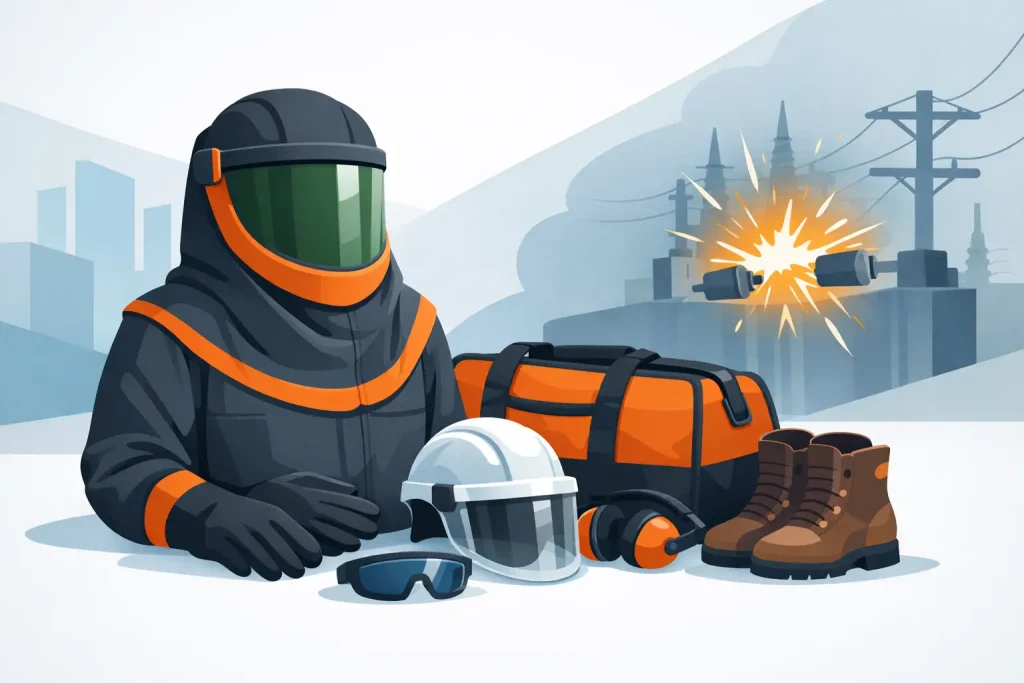
In most cases, an arc flash suit kit is built around a coat and bib overalls or a coverall, paired with a hood or face shield system and other components intended for high-energy electrical tasks. Depending on the configuration, the kit may also include a hard hat, safety glasses, hearing protection, an arc-rated hood, and a storage bag.
The exact contents vary by manufacturer and by arc rating. That matters because buyers sometimes assume all kits are packaged the same way. They are not. One kit may be ready for deployment out of the box, while another may require separate selection of voltage-rated gloves, leather protectors, or footwear.
That distinction is important on active jobsites. A purchasing team may think they have fully outfitted a crew, but the delivered package may only cover the suit portion of the PPE system. Before placing an order, confirm what is included and what still needs to be sourced separately.
How to choose an arc flash suit kit by hazard level
The first filter is the hazard assessment. Arc flash PPE is selected based on the incident energy analysis or the PPE category established under the site’s electrical safety procedures. The suit kit needs an arc rating that meets or exceeds the exposure for the task.
This is where buyers need to stay precise about standards. NFPA 70E and CSA Z462 relate to workplace electrical safety and arc flash protection practices. NFPA 2112 applies to flame-resistant garments for flash fire, which is a different hazard. CAN/CGSB 155.20 addresses protection against hydrocarbon flash fire and optionally steam and hot fluids. Those standards are not interchangeable, and they should not be treated as if one approval covers every hazard.
For electrical work, the key question is whether the kit’s arc thermal performance value, or ATPV, is high enough for the calculated exposure. A higher rating is not automatically better for every task. It can add weight and bulk, which may reduce comfort and efficiency during lower-exposure work. The right choice is the one that matches the task with a reasonable safety margin while still allowing the worker to move, see, and perform the job correctly.
Fit and mobility matter more than many buyers expect
A compliant arc flash suit kit still has to work in the field. If the hood shifts when a worker turns their head, if the face shield fogs easily, or if the bibs are too tight to kneel or climb, the gear becomes harder to wear correctly. That creates its own safety problem.
Sizing should account for the garments worn underneath. Arc flash suits are often layered over daily workwear, and that changes how a size fits in practice. A kit that feels acceptable over a T-shirt in a fitting room may be restrictive when worn over arc-rated base layers or standard work clothing on a cold morning.
This is one reason many operations standardize by task type rather than buying one universal kit for everyone. Crews doing switching, testing, troubleshooting, or energized maintenance may need different configurations based on exposure level and frequency of use. Standardizing intelligently can improve compliance because workers are more likely to wear gear that fits the actual job.
The hood, face shield, and visibility trade-off
For many users, the hood is the deciding factor in whether a kit performs well day to day. A well-designed hood should provide clear visibility, stable head movement, and a secure fit with the rest of the system. If visibility is poor, even a properly rated kit can slow work and increase errors around energized equipment.
There is always a trade-off here. Higher levels of protection often mean more material, more structure, and more heat retention. That does not mean workers should step down in protection for comfort. It means buyers should compare hood design, lens quality, anti-fog performance, and airflow features rather than looking at rating alone.
In practical terms, comfort affects compliance. If a worker dreads using the hood because it is hot, heavy, or difficult to see through, wear practices can slip. The best purchasing decisions usually balance protection level with enough usability to support real-world wear time.
What an arc flash suit kit does not replace
An arc flash suit kit is only one part of the electrical PPE system. It does not replace voltage-rated hand protection where shock hazards are present. It does not replace proper footwear, hearing protection, or eye protection where required. It also does not replace lockout procedures, energized work permits, or hazard elimination.
This is worth emphasizing because arc flash gear is sometimes treated as the main control. It is not. PPE is the last line of defense after the job has been evaluated and safer work practices have been applied. The better the upstream planning, the less often workers need to rely on the highest levels of arc flash PPE.
For purchasing teams, that means coordination matters. The suit kit should be bought as part of a broader PPE program, not as an isolated item selected by price alone.
Compliance checks before you place the order
When reviewing an arc flash suit kit, start with the arc rating and the product documentation. Confirm the garment labeling, test data, and intended use. Make sure the kit aligns with the site’s electrical safety standard and hazard assessment. Then check the practical details – sizing range, replacement components, laundering guidance, and availability for repeat orders.
Repeat purchasing matters more than many organizations expect. Once a crew is trained on a specific hood style or suit configuration, changing models for the next order can create fit and compatibility issues. If you are buying for multiple workers or multiple locations, consistency can reduce confusion and simplify restocking.
For that reason, many buyers work with suppliers that carry both arc flash PPE and related safety apparel categories in one place. A specialized industrial source can usually support better cross-category purchasing decisions than a general workwear seller, especially when compliance categories are involved.
When lower cost becomes higher cost
Price always matters, especially for larger crews, but the lowest initial cost is not always the lowest operating cost. A cheaper arc flash suit kit may have shorter service life, fewer replacement parts, or poorer wear acceptance in the field. If a hood lens scratches quickly or a zipper fails under regular use, the replacement cycle can erase the savings fast.
There is also the cost of mismatch. Ordering a high-rated kit for tasks that do not require it can increase worker fatigue and reduce productivity. Ordering a kit with incomplete components can delay deployment and trigger urgent backorders. The strongest buying decision usually comes from matching specification to use, not simply trying to maximize or minimize every feature.
A supplier focused on industrial PPE categories, such as Coverallsale, is generally better positioned to help buyers compare those specifications in a practical way. That matters when the purchase has to satisfy both the safety department and the crew actually wearing the gear.
Common Questions
What is included in an arc flash suit kit?
Most arc flash suit kits include an arc-rated coat and bib overalls or coverall, plus a hood or face shield assembly. Some kits also include a hard hat, safety glasses, hearing protection, and a storage bag. Always verify the exact contents before ordering.
How do I know what arc rating I need?
The required rating should come from the incident energy analysis or the PPE category defined by your electrical safety program. The kit’s arc rating must meet or exceed the expected exposure for the task.
Is an arc flash suit kit the same as flash fire PPE?
No. Arc flash PPE is selected for electrical arc hazards under standards such as NFPA 70E and CSA Z462. Flash fire garments may comply with NFPA 2112 or CAN/CGSB 155.20, which address different hazards.
Can one arc flash suit kit cover every electrical task?
Sometimes, but not always. A single kit may be practical for certain crews, but it can also be heavier or more restrictive than necessary for lower-exposure work. Many sites use different PPE levels based on task and hazard assessment.
What should purchasing teams check before buying?
Check the arc rating, kit contents, sizing, labeling, documentation, and replacement part availability. It also helps to confirm that the same model will be available for future reorders so crews can stay with a consistent setup.
The best arc flash PPE purchase is the one that matches the task, supports compliance, and holds up under real working conditions. When the kit fits the hazard and the worker, it does its job without getting in the way.
