
No products in the cart.
flame-resistant-clothing
Flame Resistant Work Shirts That Fit the Job
27
Jun
Jun
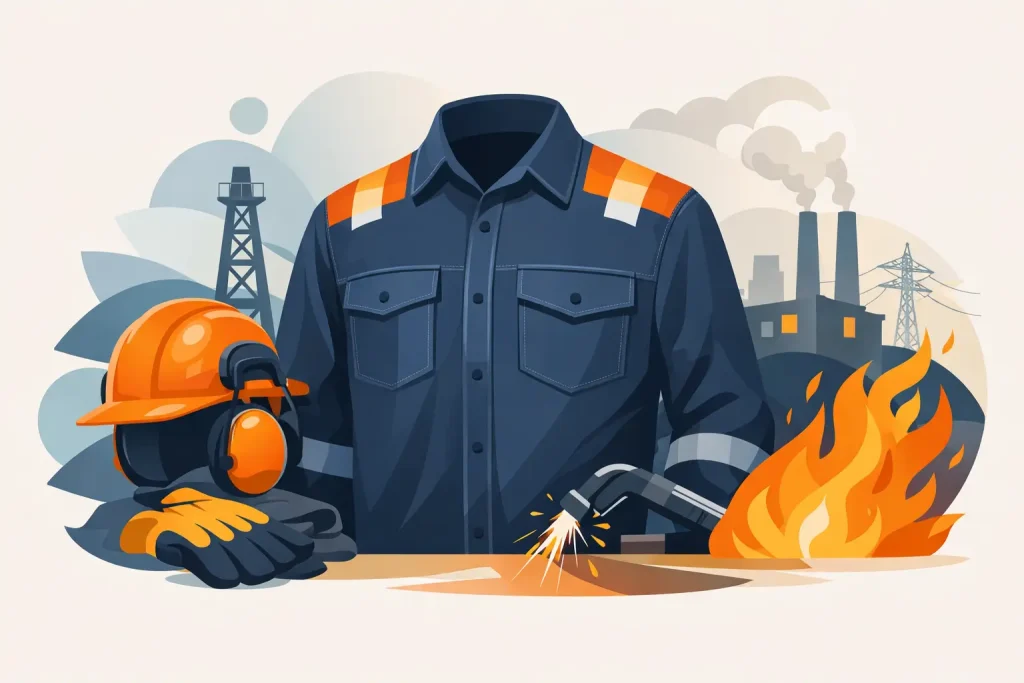
If your shirt is part of your PPE, it cannot be an afterthought. Flame Resistant Shirts are daily-wear garments for crews exposed to flash fire, arc flash, or intermittent heat and ignition risks, and the right choice affects compliance, comfort, and how consistently workers keep the shirt on through a full shift. On most jobs, that matters just as much as the label.
What flame resistant work shirts are meant to do
A flame resistant shirt is designed to self-extinguish or resist continuing to burn after exposure to an ignition source. That is different from ordinary workwear, which can ignite, continue burning, and increase injury severity. In practical terms, FR shirts are built to reduce burn injury in specific hazard environments, not to make the wearer fireproof.
That distinction matters because buyers sometimes group all protective garments together. They are not interchangeable. A shirt selected for flash fire protection is not automatically the same thing as a shirt selected for electrical arc flash exposure, and high-visibility apparel addresses a different hazard entirely. Standards need to match the exposure.
For industrial buyers, that means starting with the task and the site requirement, not with color, brand, or price point. Oil and gas, electrical utilities, manufacturing, petrochemical work, and some maintenance operations often require FR garments, but the exact specification can vary by role.
How to choose flame resistant work shirts
The fastest way to narrow options is to look at hazard type, compliance requirement, fabric, and wear conditions together. A shirt that works well for refinery maintenance may not be the best choice for utility line work or an indoor electrical environment with heat stress concerns.
Match the shirt to the hazard
For flash fire environments, garments may need compliance with NFPA 2112. For arc flash exposure, the applicable garment selection often ties to NFPA 70E and CSA Z462 program requirements, with arc-rated clothing used where electrical hazards are present. In Canada, CAN/CGSB 155.20 applies to workwear for protection against hydrocarbon flash fire, with optional coverage for steam and hot fluids depending on the garment.
These are not interchangeable labels. A common purchasing mistake is assuming that any FR shirt covers every thermal hazard. It does not. Safety managers and buyers need to confirm which standard the site requires and whether the garment is designed and labeled accordingly.
Choose the right fabric for the work cycle
Fabric choice affects wear life, comfort, laundering, and price. In broad terms, buyers usually compare treated cotton blends and inherently flame resistant fabrics such as Nomex and other engineered fiber systems.
Treated fabrics can offer a familiar work shirt feel and a lower initial purchase price. They often work well for large uniform programs where replacement cycles are closely managed. The trade-off is that laundering practices matter, and overall life span depends heavily on wear conditions and garment quality.
Inherent FR fabrics carry flame resistance in the fiber itself rather than through a finish. They are often chosen for demanding environments, repeated industrial laundering, and longer-term wear expectations. The upfront cost is usually higher, but some operations find the longer service life offsets that over time.
Get the fit right or workers stop wearing it properly
A shirt that binds at the shoulders, rides up when reaching, or feels too heavy for the work area will get unbuttoned, rolled up, or replaced with something non-compliant when supervision is light. That is not a clothing issue alone. It becomes a safety issue.
Look for practical details such as range of motion through the back and sleeves, enough shirt length to stay tucked if required, cuffs that work with gloves, and closures that are durable under daily use. In hotter environments, lighter-weight FR fabrics can improve compliance because workers are more likely to keep them on correctly.
Key features that matter on the job
Not every feature has equal value. Some are useful on paper and irrelevant in the field. For most industrial crews, durability, closure design, pocket placement, and visibility options matter more than cosmetic styling.
Shirts used in welding-adjacent tasks, maintenance, utilities, and field service need to handle abrasion, frequent washing, and long hours. Reinforced seams, stable collars, and durable buttons or snaps hold up better under repeated use. If workers carry pens, small tools, or notebooks, pocket design should support the task without creating unnecessary snag points.
For roadside, utility, and outdoor operations, FR shirts may also need to coordinate with high-visibility requirements. That does not mean standard hi-vis apparel can replace FR apparel. If both hazards are present, the garment needs to address both conditions according to the applicable standards and site policy.
Moisture management is another factor buyers should not ignore. Heat stress can affect productivity and compliance. A crew working indoors near energized equipment may prefer a lighter arc-rated shirt, while an outdoor oil and gas crew may prioritize durability and layered protection for changing weather. There is no single best shirt for every environment.
Compliance and documentation are part of the purchase
For individual buyers, a shirt may look like a straightforward garment decision. For supervisors and purchasing teams, it is also a documentation decision. Product descriptions, labels, and manufacturer specifications need to align with site safety requirements.
That means checking garment ratings, standard references, care instructions, and available size runs before placing a large order. It also means avoiding shorthand that creates confusion. FR, arc-rated, NFPA 2112, NFPA 70E, CSA Z462, and CAN/CGSB 155.20 are related to protective clothing decisions, but they are not all saying the same thing.
If a site requires arc flash protection, the garment should be evaluated within that arc flash PPE framework. If the site requires flash fire protection, the garment needs to meet that requirement. Procurement errors usually happen when someone buys by category name alone instead of by verified specification.
Buying for one worker versus outfitting a crew
A single worker can often buy based on personal preference once the required protection level is known. A purchasing team does not have that luxury. Crew outfitting requires consistency across sizes, replenishment planning, and enough product depth to handle new hires and replacements without mixing in non-matching garments.
That is where category-driven sourcing helps. Buyers often need flame resistant work shirts alongside FR pants, coveralls, arc flash PPE, rainwear, and standard site essentials. Sourcing those from one specialized supplier reduces mismatched orders and saves time during onboarding or seasonal replenishment. For operations managing multiple hazard categories, that practical efficiency matters as much as unit price.
Budget still matters, of course. Some teams standardize a lower-cost shirt for routine wear and reserve premium inherent FR garments for the harshest conditions or highest-use roles. That can work, provided all selected garments still meet the required hazard protection and laundering controls are enforced.
Care, replacement, and service life
Even the right shirt will fail the job if it is not maintained properly. Contamination, improper washing, unauthorized repairs, and normal wear all affect performance. Workers should follow the manufacturer care instructions, and employers should have a clear replacement process for torn, heavily worn, or contaminated garments.
A shirt does not need to be falling apart to be removed from service. Broken closures, damaged cuffs, seam failures, and embedded flammable contaminants can all be reasons to replace it. Buyers who focus only on purchase price often miss the real cost of garments staying in service too long.
For larger programs, periodic checks help. When supervisors review wear patterns by role, they can often spot where a different fabric weight or construction would improve life span and worker acceptance. That kind of adjustment is usually more effective than simply reordering the same shirt every cycle.
Common Questions
Are all flame resistant work shirts arc rated?
No. Some flame resistant work shirts are intended for flash fire protection, while others are arc rated for electrical exposure. Check the garment labeling and specifications against the hazard assessment and site requirement.
What is the difference between FR and NFPA 2112?
FR describes the flame resistant property of the garment or fabric. NFPA 2112 is a specific standard for flame resistant garments used to help protect industrial personnel against flash fire. A shirt can be described as FR, but buyers still need to confirm whether it meets the required standard.
Can workers wear a non-FR base layer under an FR shirt?
That depends on the hazard and the site policy, but in many applications non-melting, non-flammable underlayers are preferred. Layering decisions should follow the employer’s PPE program and the garment manufacturer’s guidance.
How often should flame resistant work shirts be replaced?
Replace them when they show damage, excessive wear, contamination, or any condition that could reduce protection or proper closure. There is no single schedule that fits every operation because wear conditions vary widely.
Are lighter-weight FR shirts less protective?
Not necessarily. Protection depends on the garment rating, construction, and intended hazard, not just fabric weight. Lighter shirts can improve comfort and compliance, but they still need to meet the required specification for the job.
The best shirt is the one that matches the hazard, holds up to the work, and gets worn correctly every shift. That is the standard worth buying to.
