
No products in the cart.
flame-resistant-clothing, Industrial PPE, Industrial Workwear
Does FR Clothing Shrink? What Work Crews Need
11
Aug
Aug
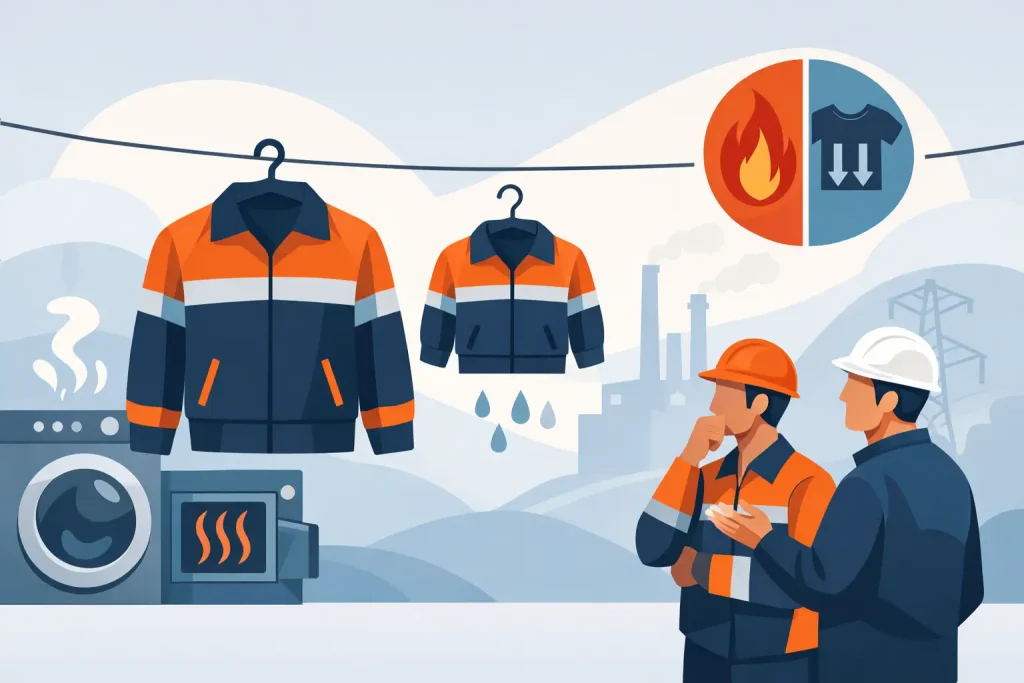
A new set of FR coveralls that fits properly on day one can feel noticeably different after the first laundry cycle. So, does FR clothing shrink? Yes, some flame-resistant clothing can shrink, particularly cotton-rich garments and garments exposed to high dryer heat. The amount varies by fiber, construction, finish, and whether the garment was pre-shrunk during manufacturing.
For workers, supervisors, and buyers, this is not only a comfort issue. FR clothing needs to cover the body as intended. Sleeves that pull up, pant legs that ride too high, or coveralls that become restrictive can affect day-to-day mobility and leave less practical coverage where a flash-fire or arc-flash hazard exists.
Why FR Clothing Can Shrink
FR clothing is not made from one universal fabric. Inherent FR garments use fibers with built-in flame resistance, such as Nomex or certain modacrylic blends. Treated FR garments are commonly made from cotton or cotton blends that receive an FR treatment. Both types may have different shrinkage behavior.
Cotton is the most likely fiber to shrink. When cotton fibers are washed and then exposed to heat, they can relax and contract. A treated cotton FR shirt, jean, or coverall may therefore lose some length or width over repeated wash cycles, especially if it is dried on high heat. The FR treatment does not automatically prevent normal fabric shrinkage.
Inherent FR fabrics can also change size, but their response depends on the blend and garment design. Aramid fibers such as Nomex generally have strong dimensional stability under normal laundering conditions. However, if an inherent FR garment includes cotton, rayon, or another shrink-prone fiber for comfort, moisture management, or stretch, it may still shrink to some degree.
Manufacturers account for expected laundering when they set garment sizing. A pre-shrunk garment should not be assumed to be shrink-proof. Pre-shrinking reduces the expected change, but it does not eliminate it. Always use the care label and manufacturer instructions for the specific garment rather than applying a general rule to every FR item in a crew program.
Does FR Clothing Shrink More Than Regular Workwear?
Not necessarily. An FR garment made with cotton can shrink much like a comparable cotton work shirt or pair of coveralls. The difference is that improper laundering carries higher consequences. With ordinary workwear, excessive shrinkage may be an inconvenience. With protective apparel, it can affect fit, garment service life, and the worker’s ability to wear the required layer correctly.
FR workwear should also not be treated like standard laundry simply because it looks like a regular shirt, hoodie, coverall, or pair of pants. Fabric softeners, bleach, and certain stain treatments may leave residues, weaken fibers, or conflict with the manufacturer’s care instructions. Contamination from flammable oils, grease, solvents, or other combustible materials can create a greater concern than modest shrinkage because the contaminant may ignite or continue to burn.
A garment that has shrunk slightly but still fits properly is not automatically noncompliant. Its protection rating is determined by the garment system, fabric, construction, labeling, and applicable standard, not by whether it has changed a small amount in the wash. But once the fit is too tight, too short, damaged, or compromised by contamination, it should be evaluated and replaced when necessary.
Heat Is Usually the Main Cause of Excessive Shrinkage
The dryer is often where avoidable shrinkage happens. High heat can cause cotton-rich FR fabrics to contract more than expected. Overdrying also adds wear to the fabric, seams, reflective trim, closures, and elastic components.
For most FR garments, washing in warm water and tumble drying on a low setting or using the manufacturer-recommended setting is the practical approach. Remove garments promptly when dry. Do not leave them cycling through unnecessary high heat, and do not use a hot iron unless the care label specifically permits it.
Commercial laundries require the same attention. Safety managers should confirm that the laundry provider understands the garment type and follows the manufacturer’s instructions. A laundry program designed for general uniforms may use chemistry or drying temperatures that are unsuitable for FR clothing. This is particularly relevant for crews using treated cotton garments, where repeated industrial laundering can affect appearance, size, and useful life.
How to Wash FR Workwear Without Causing Unnecessary Shrinkage
The garment label is the controlling instruction. Still, a few standard practices help crews avoid common mistakes. Wash FR garments separately from heavily soiled clothing when practical, especially garments contaminated with oil, grease, or flammable materials. Turn garments inside out if the label recommends it, close zippers and fasteners, and avoid overloading the machine so water and detergent can rinse through the fabric.
Use a normal detergent that does not contain bleach. Chlorine bleach is generally not appropriate for FR garments, and fabric softeners should be avoided unless the manufacturer specifically approves them. Softener residue can affect moisture movement and may create a surface issue on protective apparel.
Temperature matters. Warm water is often sufficient for ordinary jobsite soil, while hot water may be required only when the label allows it and the soil level justifies it. Use the lowest dryer heat that will dry the garment effectively. If a garment is visibly contaminated with flammable substances or cannot be adequately cleaned, do not keep wearing it just because it still looks serviceable.
Do not make laundering decisions based on a garment’s FR label alone. NFPA 2112 addresses garments designed to protect industrial personnel from flash fire. NFPA 70E and CSA Z462 apply to workplace electrical safety and arc-flash-related PPE selection. CAN/CGSB 155.20 addresses workwear for protection against hydrocarbon flash fire and, optionally, steam and hot fluids. These standards address different hazards and should not be used interchangeably. Care requirements still come from the garment manufacturer.
Buy FR Garments With Laundering in Mind
For individual buyers, the safest starting point is a garment that fits correctly before it is washed, without relying on an oversized fit. Buying excessively large clothing can create snagging and mobility issues, while buying a close fit with the expectation that it will stretch out is equally risky.
For purchasing teams, sample laundering is useful before placing a large uniform order. Wash and dry several representative sizes according to the planned process, then check sleeve length, inseam, chest movement, closure function, and general comfort. This gives the team real information on how that garment performs in its actual laundry environment.
Fabric choice matters as well. A cotton-rich treated FR coverall may be a practical, economical choice for some applications, but the program should account for normal shrinkage and replacement planning. Inherent FR garments may offer different durability and dimensional-stability characteristics, though they can come at a higher initial cost. The right choice depends on the hazard assessment, required arc rating or flash-fire protection, laundering method, expected wear, and budget.
Workers should report fit changes early. Waiting until cuffs sit above gloves or pant hems no longer cover work boots turns a manageable uniform issue into a PPE concern. Keeping accurate size records and allowing for normal replacement cycles helps supervisors maintain consistency across the crew.
Common Questions
Does washing remove the FR protection?
Proper laundering normally does not remove the flame-resistant properties of a compliant FR garment when the manufacturer’s instructions are followed. Inherent FR fibers have flame resistance built into the fiber. Treated FR garments are designed to maintain their FR performance through their stated useful life and laundering conditions. Bleach, improper chemicals, severe contamination, abrasion, and damage can still affect the garment and should be addressed.
Should I size up because FR clothing shrinks?
Do not automatically size up. Start with the manufacturer’s size chart and ensure the garment provides appropriate movement and coverage before laundering. If your organization uses a specific garment and laundry process, sample washing can show whether a particular size or fabric requires an adjustment.
Can I air dry FR clothing?
Air drying can help reduce heat-related shrinkage and is acceptable when permitted by the garment label. It may not be practical for every operation, particularly with heavy coveralls. If using a dryer, low heat and prompt removal are usually better than high heat and overdrying.
When should shrunken FR clothing be replaced?
Replace it when it no longer fits correctly, restricts movement, fails to provide intended coverage, has damaged seams or closures, is badly worn, or cannot be cleaned of hazardous contamination. A properly fitting garment is part of keeping the selected PPE system workable for every shift.
The practical standard is simple: launder FR workwear according to its label, manage dryer heat, and replace garments before poor fit becomes a jobsite problem.
