
No products in the cart.
Arc Flash Protection, flame-resistant-clothing, nomex-clothing
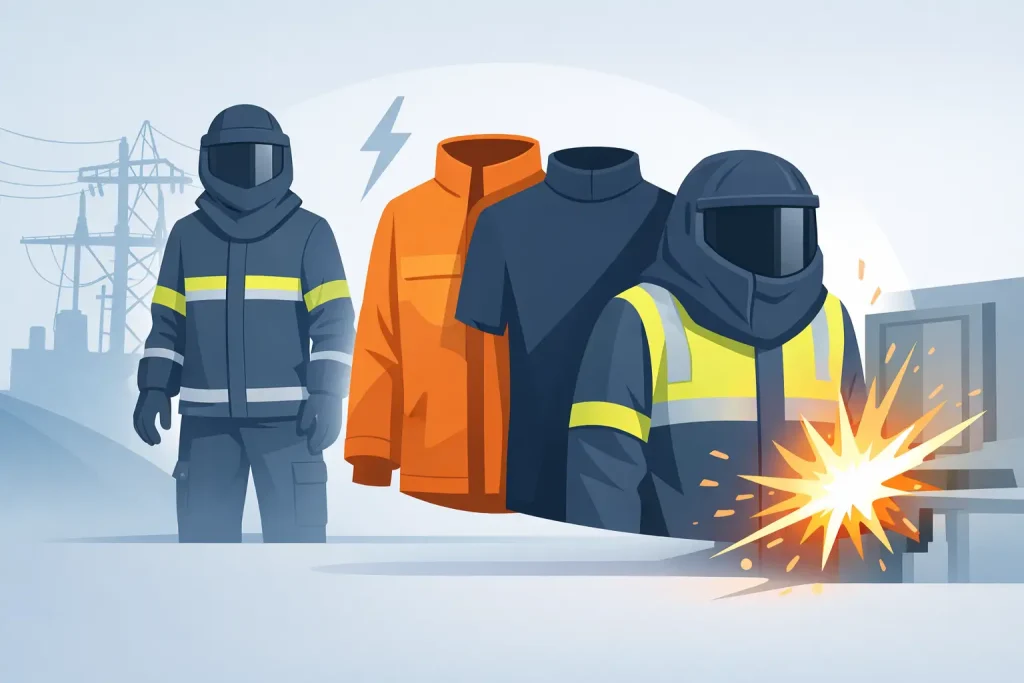
Arc Flash Layering System Example for Crews
03
Aug
Aug
Arc flash clothing is not selected by appearance, warmth, or a single garment label. The full worn system must provide an arc rating that meets or exceeds the incident energy identified by the electrical risk assessment. It also has to remain comfortable enough that workers will keep it on, move safely, and perform the task correctly.
A worker opens an energized cabinet in cold weather. A standard sweatshirt goes over an arc-rated shirt, and a rain shell goes on top when the weather turns. That combination may feel practical, but it can defeat the protection the worker was issued. This arc flash layering system example shows how to build a wearable clothing system around the actual electrical hazard, not around whatever is closest in the truck.
Start With the Electrical Hazard Assessment
NFPA 70E and CSA Z462 address workplace electrical safety and the selection of arc flash PPE. The employer’s electrical safety program and risk assessment determine whether arc-rated clothing is required and what protection level is needed. That decision may be based on calculated incident energy at the working distance or, where applicable, the PPE category method.
A garment’s arc rating is commonly expressed as ATPV or EBT, in cal/cm². For clothing selection, the key rule is straightforward: the arc rating of the complete clothing system must meet or exceed the required incident energy. A worker facing a 12 cal/cm² exposure needs a tested system rated at least 12 cal/cm².
Do not treat every garment rating as automatically additive. If an 8 cal/cm² shirt is worn under a 10 cal/cm² coverall, it does not automatically create an 18 cal/cm² system. Layered systems need manufacturer test data or a documented calculation method that establishes the combined arc rating. This is where safety managers should rely on the garment manufacturer, PPE supplier, and their electrical safety program rather than assumptions.
Arc Flash Layering System Example: 12 cal/cm² Work
Consider a utility maintenance crew assigned to troubleshoot equipment with an incident energy of 12 cal/cm². The job is outdoors in cool, wet conditions. The worker needs warmth and weather resistance, but the outer layers cannot introduce melt, drip, or ignition hazards.
A practical system may include an arc-rated long-sleeve base layer, an arc-rated work shirt and arc rated pants or coveralls, and an arc-rated outer layer that has been tested as part of a system or carries a sufficient rating for the total requirement. The employer may choose a 12 cal/cm² or greater arc-rated coverall over compatible FR layers, or a documented multi-layer system with a combined rating of 12 cal/cm² or higher.
The selection should also cover the parts of the body that clothing alone does not protect. Depending on the task assessment, that can include an arc-rated face shield or hood, balaclava, voltage-rated gloves with leather protectors, hearing protection, and appropriate footwear. The clothing system is only one part of the PPE package.
The practical point is not that every 12 cal/cm² task requires the same garments. A worker may need one system for a brief indoor troubleshooting task and a different system for a full outdoor shift. Both systems must meet the documented arc rating requirement. The difference is comfort, durability, mobility, visibility, and weather protection.
A Sample Cold-Weather Clothing Setup
For a documented 12 cal/cm² exposure, a crew might use an arc-rated base layer beneath an arc-rated shirt and pants, then add an arc-rated insulated jacket or bib overall for cold conditions. The combined system must be supported by test data showing its arc performance. If the weather layer has not been evaluated with the inner layers, it should not be assumed to provide the needed protection.
Avoid non-FR cotton hoodies, polyester fleece, nylon shells, and conventional rainwear over arc-rated garments unless the item is specifically rated and approved for the use. Fabrics that melt or ignite can increase burn injury during an arc event. A non-arc-rated outer garment can also cover labels, interfere with visibility features, and create uncertainty during a field inspection.
Build the System From the Skin Out
Base layers matter because they are closest to the skin. When a base layer is required for warmth, it should be made from non-melting material and, for arc flash work, should generally be arc-rated when it is part of the protective system. Arc-rated underwear, long johns, and knit shirts can provide comfort without introducing synthetic melting hazards.
The next layer is typically the daily work garment: an arc-rated shirt with pants, coveralls, or an arc-rated coverall. This is the clothing workers may wear through most of the shift. Choose garments with a rating suited to the expected work, not simply the highest rating available. Higher-rated clothing can be heavier and hotter, which may reduce wear compliance during long shifts.
The outer layer is where purchasing decisions often go wrong. A jacket, parka, rain suit, vest, or insulated bib must be compatible with the electrical task. If it is worn during potential arc exposure, it must be selected as arc-rated PPE. For crews working near traffic or mobile equipment, high-visibility needs also have to be addressed. CSA Z96 covers high-visibility safety apparel requirements, while CSA Z462 covers electrical workplace safety. A high-visibility garment is not automatically arc-rated, and an arc-rated garment is not automatically compliant high-visibility apparel.
Verify Labels, Closures, and Garment Condition
Before issuing a layered system, verify the arc rating on each garment and keep records showing how the combined system was approved. Check whether the label identifies an ATPV, EBT, or arc rating value and whether the garment is identified as arc-rated. “Flame resistant” by itself does not confirm that a garment is appropriate for a specific arc flash exposure.
Workers should wear garments as designed. Shirts should be tucked in where required by the employer’s procedure, cuffs secured, and closures fastened. Open jackets, rolled sleeves, and exposed non-FR layers can leave vulnerable areas unprotected. Pockets should not be loaded with unnecessary combustible materials, and contaminated garments should be removed from service until properly cleaned or replaced.
Inspection is not optional. Look for holes, worn knees, damaged closures, oil contamination, embedded metal, and alterations that affect coverage. Follow the garment care label. Bleach, fabric softener, improper repairs, and industrial contaminants can affect garment performance or service life. Replace damaged PPE rather than treating it as ordinary workwear.
Avoid Common Layering Mistakes
The first mistake is adding a non-arc-rated layer because the temperature drops. Workers need a safe cold-weather option issued before the job starts. The second is assuming two ratings can be added together without evidence. The third is using a garment designed for hydrocarbon flash fire as if it automatically covers electrical arc exposure.
These hazards overlap in some workplaces, but the standards are different. NFPA 2112 and CAN/CGSB 155.20 address protective workwear for flash fire hazards. NFPA 70E and CSA Z462 address electrical arc flash safety. A garment may carry certifications or ratings relevant to more than one hazard, but buyers and supervisors must review the label and product specification for the hazard being managed.
Another mistake is buying only for the worst-case task. A very high-rated kit may be necessary for some work, but issuing it for every routine activity can create heat stress and discourage use. Many programs work better with a clear set of daily-wear arc-rated garments plus task-specific outer layers and hoods for higher-energy work. The correct approach depends on the assessment, work duration, climate, and crew roles.
Make Purchasing Easier for the Whole Crew
For supervisors and procurement teams, standardize approved layer combinations by job type and exposure level. Record garment model numbers, arc ratings, sizes, and compatible outer layers. This reduces last-minute substitutions and makes replacement ordering more consistent.
A practical issue matrix can separate daily work shirts and pants, insulated layers, rain protection, high-visibility options, and task-specific PPE. It should identify the approved combinations, not just individual products. Coverallsale can support this type of category-based purchasing by helping buyers organize arc-rated workwear alongside weather gear, high-visibility apparel, and other required PPE.
The best clothing system is the one that matches the documented hazard and the actual shift. Issue safe options for heat, cold, rain, and changing tasks before workers are standing at the equipment.
Common Questions
Can I wear a regular T-shirt under arc-rated clothing?
It depends on the employer’s electrical safety program and the expected exposure. Non-melting undergarments may be acceptable in some situations, but a regular shirt does not add a documented arc rating. For a layered protective system, use arc-rated base layers when specified by the assessment or manufacturer guidance.
Do arc ratings add together when garments are layered?
Not automatically. The combined rating must be supported by testing, manufacturer documentation, or an approved calculation method. Never add the ratings printed on separate garments without verification.
Is FR clothing the same as arc-rated clothing?
No. FR describes a fabric or garment’s resistance to ignition or continued burning. Arc-rated clothing has been evaluated for arc thermal performance and carries an arc rating such as ATPV or EBT. Confirm the rating required for electrical work.
Can a high-visibility vest be worn over arc flash PPE?
Only if the vest is appropriate for the electrical hazard and approved by the employer’s PPE program. A standard polyester high-visibility vest may melt in an arc event. Use an arc-rated high-visibility garment when it will be worn during arc exposure.
When should an arc-rated outer layer be replaced?
Replace it when it is damaged, heavily contaminated, altered, or no longer provides proper coverage and closure. Follow the manufacturer’s care instructions and inspect garments before use.
