
No products in the cart.
High Visibility, Industrial Workwear
How to Choose a High Visibility Rain Jacket
02
Jul
Jul
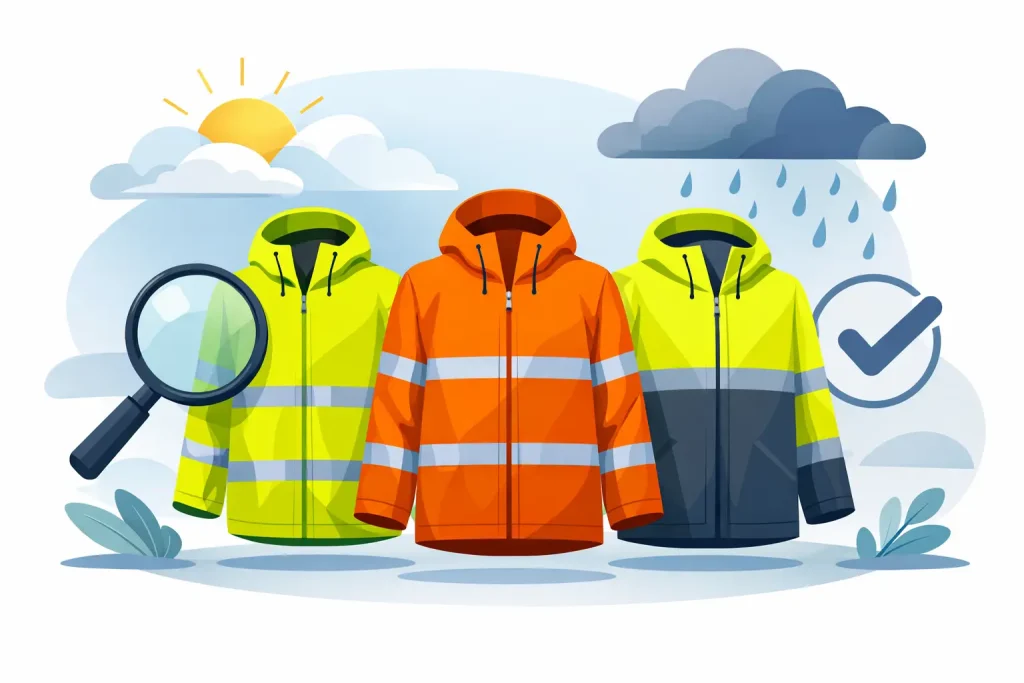
A rain shell that keeps water out but disappears in low light is a problem on any active jobsite. A high visibility rain jacket has to do two jobs at once – keep the wearer dry and keep the wearer seen. If either part falls short, the jacket is not doing enough for road work, utilities, construction, warehouse yards, or any operation where weather and moving equipment meet.
This is how to choose a high visibility rain jacket
What a high visibility rain jacket needs to do
On paper, the category looks simple. In practice, buyers usually balance visibility, weather protection, durability, and cost. Workers want a jacket that does not soak through, bind at the shoulders, or tear after a few weeks. Supervisors and purchasing teams want consistent sizing, straightforward replacement, and compliance that matches the work environment.
That is where the details matter. Some jackets are built for occasional wet weather and short outdoor tasks. Others are made for long shifts in steady rain, repeated wash cycles, and contact with rough surfaces or dirty job conditions. The right choice depends on how the jacket is actually used, not just how it looks in a product image.
Start with compliance, not just color
A bright jacket is not automatically compliant high-visibility apparel. For many Canadian worksites, CSA Z96 is the relevant standard for high-visibility safety apparel. In the US, site requirements may reference ANSI-based visibility classes. Buyers should confirm what the site, customer, or internal safety policy requires before ordering.
This point is worth slowing down on because standards are often mixed together when they should not be. High visibility standards address conspicuity. They are not the same as flame-resistant or arc flash standards. NFPA 2112, NFPA 70E, CAN/CGSB 155.20, CSA Z462, and CSA Z96 each apply to different hazards. If a worker needs visibility in rain and also needs protection from flash fire or electrical arc hazards, the garment must be selected for both requirements. One feature does not replace the other.
For purchasing teams, this means the first filter should be hazard exposure. Then look at weather protection and garment design. It saves time and avoids costly ordering mistakes.
Waterproof, water resistant, and where buyers get caught
Not every rain jacket is truly built for heavy rain. Water-resistant garments may shed light moisture for a while, but in sustained exposure they can wet out quickly. A high visibility rain jacket intended for regular outdoor work should have clear rainwear construction, including sealed or taped seams and a closure design that limits water entry at the zipper and cuffs.
This is where trade-offs begin. Heavier waterproof materials often hold up better in rough work, but they can feel warmer and less flexible. Lighter jackets improve mobility and are easier to pack, but they may not last as long when worn around sharp edges, tools, or repetitive abrasion. For a road crew in all-day rain, heavier-duty protection usually makes sense. For a supervisor moving between vehicle and site, a lighter option may be enough.
Breathability also matters, but it should be viewed honestly. No rain jacket feels perfectly dry inside during hard physical work. Sweat management, venting, and layering all affect comfort. A jacket that blocks rain well may still feel warm in humid conditions. That does not mean it failed. It means the buyer should match the garment to work intensity and weather, not expect one jacket to solve every condition.
Fit and mobility matter more than many teams expect
A compliant jacket that restricts movement will not get worn properly. Workers tug at cuffs, leave the front partly open, or switch to older gear if the fit is poor. That creates a safety issue and a purchasing issue.
Look closely at shoulder room, sleeve design, and overall length. Workers in construction, utility maintenance, and shipping yards are reaching, climbing, bending, and getting in and out of equipment. The jacket needs enough room for layering without turning into a loose snag hazard.
A longer jacket can improve rain coverage, especially when standing still or working in wind-driven rain. But extra length can also interfere with harnesses, tool belts, or movement when crouching. A shorter cut may feel better for active work, though it can leave gaps when reaching overhead. There is no universal right answer. The job role decides it.
Features that actually help on the job
Some rainwear features are useful every day. Others sound good in product copy but add little value in the field. A hood matters, but only if it adjusts well and works with hard hat use where required. Poor hood design can block side vision or pull back in wind.
Cuffs are another small detail with real impact. Adjustable cuffs help keep water from running down the arms and make gloves easier to manage. Front closures should be easy to use with wet hands or gloves. Pockets should be placed where they remain accessible and drain or resist water entry reasonably well.
Reflective striping layout should support visibility from multiple angles. On active jobsites, side and rear visibility matter just as much as front visibility. This is especially relevant around forklifts, service trucks, and low-light loading areas.
Dirt resistance is less glamorous but important. High visibility garments lose effectiveness when they get heavily soiled. In muddy or greasy environments, a jacket that cleans up reasonably well can hold its visual performance longer and reduce replacement frequency.
Matching the jacket to the work environment
A high visibility rain jacket for highway work is not always the same jacket you would issue in a plant yard or utility service fleet. Exposure patterns differ.
For road construction and traffic control, visibility is often the first concern, followed closely by weatherproofing and durability. For utility crews, mobility and compatibility with layered PPE can be just as important. In warehouse yards or logistics operations, workers may move between indoor and outdoor zones all shift, so comfort and ease of wear become bigger factors. In rail-adjacent or heavy equipment environments, visibility from distance and in poor weather usually carries extra weight.
For team buyers, it often makes more sense to standardize within job function than across the entire company. One rain jacket for every department sounds efficient, but it can create dissatisfaction and uneven wear life. A better approach is usually a small range based on task type, exposure time, and hazard profile.
Cost per jacket is not the same as value
Low upfront pricing can look attractive when ordering for a crew, but replacements add up fast if the jacket fails early or workers avoid wearing it. The better measure is service life in actual conditions.
A lower-cost jacket may be fine for occasional use, visitors, or backup inventory. For daily field use, sturdier materials and better construction usually pay off. That does not mean the most expensive option is always the best. It means buyers should compare the garment against expected wear frequency, cleaning demands, and replacement cycles.
Sizing consistency also affects cost control. If a product line runs unpredictably, returns and reorders increase, and workers lose time waiting for the right fit. That is one reason industrial buyers often prefer established workwear categories from suppliers that understand compliance-driven apparel rather than general outerwear sellers.
Common mistakes when buying high visibility rain jackets
One common mistake is buying based only on fluorescent color and assuming that covers compliance. Another is treating all rainwear as equal, even when some garments are only suited for light exposure. Teams also run into problems when they ignore layering needs. A jacket that fits over a T-shirt may not fit over a sweatshirt or required base PPE in colder weather.
Another issue is buying for the average day instead of the worst regular condition. If workers routinely face driving rain, vehicle spray, or long outdoor shifts, a light-duty jacket will not hold up. On the other hand, overbuying heavy rain gear for occasional use can create comfort complaints and unnecessary spend.
The practical answer is to define the work condition first, then buy the jacket that fits that condition most often. That is usually where the best value sits.
Common Questions
Does a high visibility rain jacket have to be waterproof?
Not always, but for regular outdoor work in wet conditions, waterproof construction is usually the better choice. Water-resistant jackets are better suited to light rain or short-duration exposure.
Is a high visibility rain jacket the same as FR rainwear?
No. High visibility and FR address different hazards. If the job requires flame-resistant or arc-rated protection, the jacket must be selected for those requirements separately and correctly.
How often should high visibility rain jackets be replaced?
It depends on wear, damage, and how well the garment maintains visibility and weather protection. Replace jackets when reflective trim is compromised, material is torn, seams fail, or soil and wear reduce visibility.
What color is best for a high visibility rain jacket?
That depends on site rules and applicable standards. Fluorescent yellow-green and fluorescent orange are both common, but the correct choice should match jobsite requirements and visibility classification needs.
Should crews all wear the same rain jacket?
Not necessarily. Standardizing by job role often works better than issuing one jacket to every worker. Different tasks call for different balance points between durability, mobility, and weather protection.
When rain, traffic, equipment, and low light show up at the same time, the right jacket stops being a simple outer layer and starts being part of the safety system. Buy it with the job in mind, and it will perform like workwear should.
