
No products in the cart.
Uncategorized
Buyer’s guide for FR balaclavas for the oil and gas industry
Working in the oil and gas industry means facing unpredictable thermal hazards every day. A Flame-Resistant (FR) balaclava isn’t just about staying warm; it’s a critical piece of PPE that protects your face and neck from flash fires and electric arcs.
Here is your comprehensive guide to selecting the right protection.
- Fabric Technology: Inherent vs. Treated
- Safety Certifications Checklist
- Essential Features to Consider
- Pro-Tip: The Hinged Design Advantage
1. Fabric Technology: Inherent FR vs. Treated FR Balaclavas
Understanding what makes a fabric “flame-resistant” is the first step in ensuring long-term safety.
Inherent FR Fabrics (e.g., Nomex, Kevlar, CarbonX)
- Protection Level: The flame-resistant properties are built into the chemical structure of the fiber itself.
- Durability: The FR protection cannot be washed out or worn away. It lasts for the entire life of the garment.
- Performance: These fabrics often provide excellent thermal protection and tend to be lightweight and moisture-wicking.
Treated FR Fabrics (e.g., FR Cotton, Westex UltraSoft)
- Protection Level: These begin as non-FR fibers (usually cotton or cotton blends) that are chemically treated to become flame-resistant.
- Durability: While modern treatments are robust, the FR properties can eventually diminish if the garment is laundered with bleach, fabric softeners, or harsh chemicals.
- Performance: Generally more budget-friendly and offers the familiar comfort of cotton, though they may feel slightly heavier than inherent blends.
2. Safety Certifications Checklist
In the oil and gas sector, “FR” is a broad term. To ensure the balaclava meets industry safety standards, check the tag for these specific certifications:
- NFPA 2112: The standard for protection against industrial flash fire. This is the “must-have” for oil and gas workers.
- ASTM F1506: Ensures the fabric is textile-tested for arc flash protection.
- NFPA 70E / PPE Category: Look for the Arc Thermal Performance Value (ATPV). Ensure the rating (measured in cal/cm2) matches the Hazard Risk Category (HRC) required for your specific job site.
- OSHA 1910.269: Often cited for workers maintaining or operating power delivery or generation equipment.
3. Essential Features to Consider
- Moisture Management: Since these are worn under hard hats and over the mouth, look for “breathable” or “wicking” properties to prevent goggles from fogging.
- Flat-Lock Stitching: Check that seams are flat against the skin to prevent “pressure points” and irritation under a tight-fitting hard hat.
- Length: Ensure the “tail” or bib of the balaclava is long enough to tuck securely into your FR coveralls or jacket to eliminate skin exposure at the neckline.
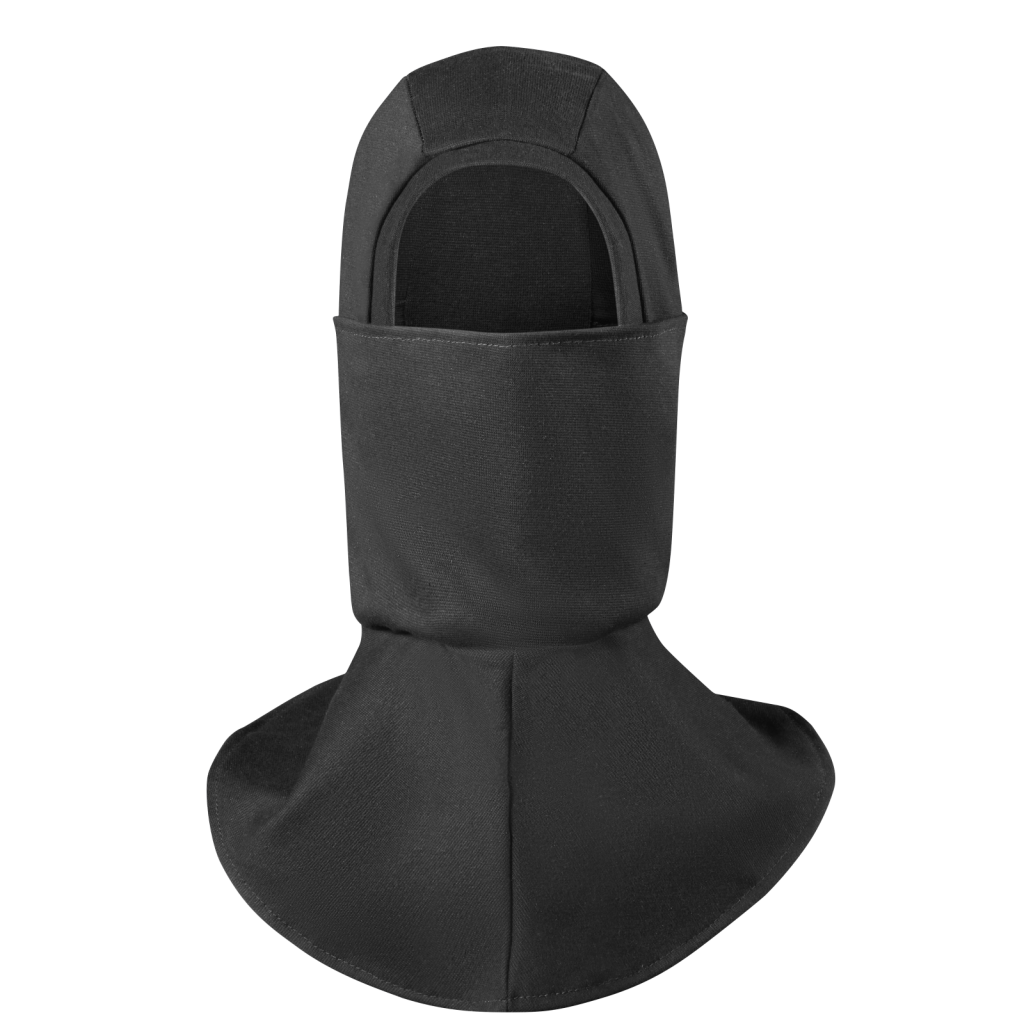
4. Pro-Tip: The Hinged Design Advantage FR Balaclavas
When you’re on a noisy site, clear communication is a safety requirement. Many traditional balaclavas require you to pull the entire headpiece down to speak clearly or to grab a drink, which can be cumbersome under a hard hat.
Pro-Tip: Look for a hinged (or “ninja-style”) design. This features a separate top and bottom section joined at the temples. It allows you to pull the face mask section down below your chin without shifting the head covering or removing your hard hat. This makes it significantly easier to use a radio, stay hydrated, and communicate clearly without compromising your overall protection.
