
No products in the cart.
Uncategorized
Please provide a comparison of flame resistant parka brands for cold weather
- FR Parka Comparisons
- Detailed Breakdown Of Parka Options
- Why Choose A Particular style
- FAQ’s
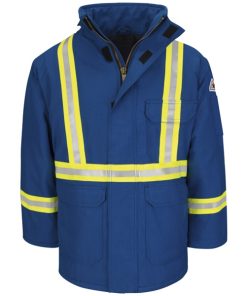
When choosing a flame-resistant (FR) parka, you aren’t just buying a winter coat; you are buying an engineered thermal barrier.
Here is a comparison of the top-rated FR parkas currently on the market, categorized by their specific strengths.
1. 2026 FR Parka Comparison Table
| Brand & Model | Best For… | Safety Rating | Arc Rating (ATPV) | Approx. Price |
| Bulwark FR Parka (Extreme Parka) | Best Overall | NFPA 2112 / 70E | 59 cal/cm² (CAT 4) | $681.00 – $817.40 |
| Atlas FR Parka (2191 Series) | Electrical/Arc | Dual Hazard NFPA 2112 / 70E | 41 cal/cm² (CAT 4) | $243.60 – $267.00 |
| Portwest FR Parka (Oil and Gas) | Extreme Cold | NFPA 2112 / 70E | 56 cal/cm² (CAT 4) | $250 – $350 |
| Atlas Hi Vis 3-In-1 2196OR CSA Z96 | Hi Visibility Orange CSA Z96 | NFPA 2112 / 70E | 32 cal/cm² (CAT 3) | $453.60 – $498.00 |
| Bulwark CSA Reflective Striping | Bulwark FR Parka with CSA Compliant Reflective Striping | NFPA 2112 / 70E | 34 cal/cm² (CAT 3) | $411.40 – $493.70 |
Choosing between these heavy-duty parkas usually comes down to whether you prefer Nomex (synthetic) or Excel FR (cotton-nylon blend) and whether you need CAT 3 or CAT 4 protection.
The Bulwark JNPCRB is the “gold standard” for extreme cold and high-risk environments due to its Nomex shell and massive CAT 4 rating, while the Atlas 2191NV and Portwest FR612 offer comparable protection using a more traditional cotton-nylon blend.
Comparison Overview
| Feature | Bulwark JNPCRB | Bulwark JLPCNV | Atlas 2191NV | Atlas 2196OR | Portwest FR612 |
| Shell Material | 6 oz. Nomex IIIA | 7 oz. Excel FR (88/12) | 8 oz. 88/12 Blend | 8 oz. 88/12 Blend | 9 oz. Bizflame (88/12) |
| Protection | CAT 4 (59 cal/cm²) | CAT 3 (34 cal/cm²) | CAT 4 (41-56 cal) | CAT 3 (32 cal) | CAT 4 (56 cal/cm²) |
| Type | Deluxe Insulated Parka | Deluxe Insulated Parka | Insulated Parka | 3-in-1 System | X-Back Winter Parka |
| Insulation | 14.2 oz. Aramid | 12 oz. Modacrylic | 14 oz. Modacrylic | 14 oz. Modacrylic | Thick FR Wadding |
| Key Strength | Extreme Heat/Arc | Breathability/Comfort | Feature-rich (D-Ring) | Versatility (Removable) | Visibility (X-Back) |
Detailed Breakdown
1. Bulwark JNPCRB (Nomex® IIIA)
This is the highest-protection model on your list.
- The Material: Made of Nomex IIIA, which is inherently flame-resistant (it won’t wash out) and very lightweight for the protection it offers.1
- Why choose it: If you are in an environment with a very high Arc Flash risk (CAT 4). It is wind-resistant and water-repellent, featuring a “breakaway zipper” for quick removal in emergencies.2
- Best for: Electrical utilities and high-risk oil and gas operations.3
2. Bulwark JLPCNV (Excel FR® ComforTouch®)
This is the “comfort-focused” version of the Bulwark parka.
- The Material: Uses a Westex Ultrasoft 88/12 blend. It feels more like traditional heavy cotton than the synthetic lighter weight feel of Nomex.
- Why choose it: It provides CAT 3 protection, which is sufficient for most standard industrial sites.4 It is generally more breathable and “softer” than the JNPCRB.
- Best for: Workers who want a heavy winter parka that feels more natural and less “plastic” than Nomex.
3. Atlas 2191NV & Portwest FR612
These two are very similar in specs and often compete directly.
- Atlas 2191NV: Stands out for its functional “extras.” It includes a D-Ring access port on the back (for fall protection harnesses) and specialized H2S monitor straps on the shoulders.5 It is a true CAT 4 heavyweight.
- Portwest FR612: Known for its “X-Back” reflective pattern, which is a requirement in certain Canadian provinces and specific industrial sites.6 It uses a slightly heavier 9 oz shell fabric and is built for the “offshore” industry style.7+1
- Best for: Field technicians who wear safety harnesses or need high-visibility compliance in harsh winter conditions.8
4. Atlas 2196OR (3-in-1 Parka)
This is fundamentally different from the others because it is a modular system.
- The Design: It consists of a shell jacket and a zip-in fleece hoodie.9 You can wear the shell alone in the spring/fall or zip in the fleece for winter.
- Why choose it: Versatility. While the system is rated for CAT 3, the shell alone is usually a lower CAT 2.
- Best for: Workers in transitional climates who don’t want to buy separate jackets for fall and winter.
Key Decision Factors
- Harness Usage: If you wear a fall protection harness daily, the Atlas 2191NV is the clear winner because of the built-in D-Ring access port.10
- Protection Level: If your site requires CAT 4, you must stick with the JNPCRB, Atlas 2191NV, or Portwest FR612. The Bulwark JLPC and Atlas 2196 only meet CAT 3.11
- Fabric Preference: Nomex (JNPCRB) is more durable and chemical-resistant but more expensive. 88/12 Blends (Atlas, Portwest, JLPCNV) are cheaper and often considered more comfortable for long shifts.
3. Critical Features to Look For
When you are looking at these models, check for these “hidden” features that define a high-quality parka:
- Storm Flaps: Ensure there is a fabric flap (secured by snaps or FR Velcro) over the zipper to prevent wind and sparks from entering.
- Breakaway Zippers: High-end FR parkas often feature zippers that can be “pulled apart” in an emergency for quick removal.
- D-Ring Access: If you work at heights, look for a “D-Ring slot” on the back of the parka to allow your safety harness to pass through.
- Internal Rib-Knit Cuffs: These “hidden” cuffs inside the sleeves prevent cold air and sparks from blowing up your arms.
A Note on Maintenance
Warning: Never use chlorine bleach or fabric softeners on these parkas. Bleach can degrade the fibers, and softeners leave a flammable coating on the surface that can ignite, even if the fabric itself is FR.
Choosing between high-performance FR parkas often leads to questions about compliance, maintenance, and utility. This FAQ addresses the most common concerns for the Bulwark, Atlas, and Portwest models.
General Protection & Compliance
Q: What is the difference between CAT 3 and CAT 4 for these parkas?
- CAT 4 (JNPCRB, 2191NV, FR612): These offer the highest level of arc flash protection (40 cal/cm²). They are designed for high-voltage environments or areas where the calculated arc flash energy is extreme.
- CAT 3 (JLPCNV, 2196OR): These provide substantial protection (typically 25 cal/cm²39 cal/cm²) but are lighter and more breathable, suitable for most general industrial, oil, and gas applications.
Q: Are these parkas “Waterproof” or “Water-Resistant”?
Most FR parkas (including these) are Water-Resistant (DWR) rather than fully waterproof. They are designed to shed rain and snow, but the fabric remains breathable to prevent moisture buildup inside. For a fully waterproof solution, you would need an FR Rain Jacket (like the Bulwark JNX6).
Brand-Specific Features
Q: Why does the Atlas 2191NV have a “hole” in the back?
That is a D-Ring Access Port. It allows you to wear your safety harness under the parka and pull the lanyard through the back. This protects your harness from the elements and keeps the parka fitting properly while you work at heights.
Q: What makes the Atlas 2196OR a “3-in-1”?
It is a modular system. You get:
- A heavy Outer Shell (Water-resistant, FR).
- A removable Fleece Hoodie (can be worn alone).
- The Combined Parka (Shell + Fleece) for maximum warmth in sub-zero temperatures.
Q: Why would I choose the Portwest FR612 over the others?
The FR612 features a specific “X-Back” reflective pattern. In many regions (like Alberta, Canada) and for certain industrial contractors, the X-pattern on the back is a mandatory safety requirement to distinguish a worker facing away from a vehicle.
Materials & Durability
Q: Nomex (JNPCRB) vs. Excel FR (JLPCNV/Atlas/Portwest): Which is better?
- Nomex: An “inherent” fiber. The flame resistance is built into the molecular structure; it cannot be washed out or worn away. It is thinner, lighter, and extremely durable.
- Excel FR (88/12 Blend): Cotton treated with an FR polymer. It feels much softer and warmer to the touch (like a heavy denim). The FR is guaranteed for the life of the garment as long as it is washed correctly.
Q: Do these parkas shrink in the wash?
- Nomex (Bulwark JNPCRB): Very resistant to shrinkage. It maintains its shape well over years of use.
- 88/12 Blends: Because they are 88% cotton, they may experience minor shrinkage (3-5%) during the first few washes. It is often recommended to air dry or use low heat to maintain the fit.
Care & Maintenance
Q: Can I wash my FR parka in a standard home washing machine?
Yes, but you must follow three strict rules:
- NO Chlorine Bleach: It will destroy the flame-resistant treatment on 88/12 blends.
- NO Fabric Softeners: These leave a flammable coating on the fibers that can ignite.
- NO Starch: Like softeners, starch can mask the FR properties.
Q: Can I patch a hole in my parka?
Only if you use FR-certified thread and FR fabric scraps. Using regular polyester thread or a non-FR patch can create a “wicking” effect that allows the garment to catch fire in an arc event. Most manufacturers offer repair kits or recommend certified repair shops.
Sizing & Fit
Q: How does the sizing compare between Bulwark and Atlas?
- Bulwark: Known for a very “Generous” or “Relaxed” fit. If you are between sizes, you can often size down unless you plan to wear multiple heavy layers (like a sweatshirt and a vest) underneath.
- Atlas: Usually follows a more Standard North American fit. They offer a massive size range (up to 7XL), making them the best choice for very large or tall workers.
While manufacturers of Flame Resistant (FR) clothing rarely provide a specific “degree rating” (as comfort depends heavily on activity level and layering), we can compare their insulation weights and wind barriers to determine which is best for specific temperature ranges.
Side-by-Side Temperature & Insulation Comparison
| Model | Insulation Weight | Protection | Warmth Category | Best Environment |
| Bulwark JNPCRB | 14.2 oz Aramid | CAT 4 | Extreme Cold | Northern Alberta/BC (-30°C and below) |
| Atlas 2191NV | 14.0 oz Modacrylic | CAT 4 | Extreme Cold | Windy, harsh industrial sites (-30°C) |
| Atlas 2196OR | Variable (3-in-1) | CAT 3 | Versatile | Changing climates (-5°C to -25°C) |
| Portwest FR612 | 11.0 oz Wadding | CAT 4 | Severe Cold | Offshore or high-moisture (-20°C) |
| Bulwark JLPCNV | 12.0 oz Modacrylic | CAT 3 | Moderate-Severe | Standard industrial winter (-15°C to -20°C) |
Understanding the Warmth Factors
When comparing these parkas for a location like Canada, where it can be both freezing and damp, consider these three technical details:
1. The “Wind Barrier” Difference
The Bulwark JNPCRB and Atlas 2191NV both feature an internal wind barrier. In technical terms, while the insulation traps heat, the wind barrier prevents “convective heat loss” caused by high winds. Without this, even a thick coat can feel cold if the wind “cuts” through the fabric.
2. Insulation Type: Aramid vs. Modacrylic
- Aramid (Bulwark JNPCRB): Used in the highest-end gear. It provides the most warmth for the least amount of bulk and is inherently flame-resistant.
- Modacrylic (Atlas/Portwest/JLPC): This is a synthetic fiber that mimics the feel of wool. It is excellent at managing moisture and is generally used in “heavyweight” 88/12 cotton-nylon blends.
3. The Layering System
To maximize these parkas, you should follow the FR Layering Principle. A CAT 4 parka is designed to be the “outer shell” of a system.
Pro Tip: In extremely cold conditions, the Atlas 2196OR (3-in-1) is unique because the fleece layer creates an extra “air pocket” between the shell and your body, which is often more effective at trapping heat than one single thick layer.
Frequently Asked Questions (Warmth Edition)
Q: Can I wear a non-FR hoodie under these parkas for extra warmth? No. Never wear non-FR synthetic materials (like polyester or nylon) under your FR parka. In the event of an arc flash or fire, non-FR materials can melt to your skin even if the parka itself stays intact. Always use FR-rated base layers.
Q: Which one is best for “Wet Cold”? The Bulwark JNPCRB and Portwest FR612 are specifically noted for their water-repellent finishes. While not waterproof rain gear, they shed sleet and heavy snow better than the standard cotton-heavy blends.
Q: Does the “Arc Rating” (cal/cm²) affect how warm the coat is? Not directly. The Arc Rating measures how much heat energy the fabric can block from an electrical explosion. However, because CAT 4 protection requires more layers or denser material, CAT 4 coats (like the JNPCRB or 2191NV) are almost always warmer than CAT 2 or 3 coats.
Pairing your extreme cold-weather parkas (like the Bulwark or Atlas models we discussed) with the right FR base layers is critical for -30°C. At these temperatures, the base layer’s job shifts from just protection to moisture management—if you sweat and that moisture stays against your skin, you will freeze regardless of how thick your parka is.
For -30°C, I recommend Heavyweight (CAT 2 or CAT 3) base layers rather than standard CAT 1 “t-shirt” style liners.
Pro-Tip for -30°C: The “Mid-Layer” Secret
At -30°C, a two-layer system (Base + Parka) is often not enough. To truly stay warm, add a Mid-Layer like an FR Fleece or an FR Heavyweight Hoodie.
- Layer 1 (Base): Wicks sweat (e.g., DragonWear Livewire).
- Layer 2 (Mid): Traps air (e.g., Bulwark FR Fleece Jacket).
- Layer 3 (Outer): Blocks wind/snow (e.g., Your Atlas or Portwest Parka).
