
No products in the cart.
Industrial Workwear Automotive
How to choose the best coveralls for mechanics
09
Jul
Jul
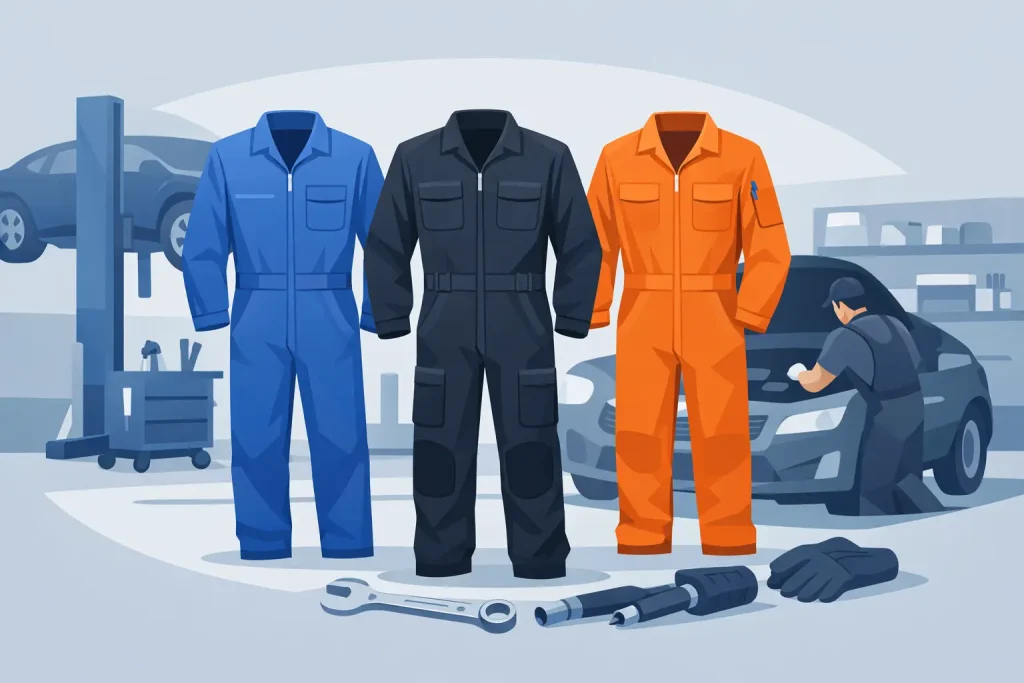
The best coveralls for mechanics are not just about looking uniform on the shop floor. They need to handle abrasion, repeated washing, tight movement around engines, and in some cases exposure to flash fire or arc-related hazards. Grease on the sleeves, sparks near the bay, and a creeper wheel catching loose fabric – that is when the wrong workwear starts costing you time.
For most mechanics, the right coverall comes down to three things: the work environment, the hazard level, and how the garment holds up after weeks of real use. A light-duty service bay has different demands than diesel repair, welding-adjacent maintenance, or field service around energized equipment. Buying the wrong type usually shows up fast in blown knees, torn pockets, heat buildup, or fabric that never fits right over boots and layers.
How to choose the best coveralls for mechanics
A good mechanic coverall should work with the job, not against it. That starts with fabric. Poly-cotton blends coveralls are common because they balance safety durability, comfort, and ease of care. They are a practical choice for general automotive service, quick lube shops, fleet maintenance, and indoor repair environments where the main concerns are dirt, oil, and daily wear.
Cotton coveralls can feel cooler and more breathable, which matters in hot shops or during summer service work. The trade-off is that they may wrinkle more, absorb more fluid, and wear differently over time. Heavier fabrics usually last longer under hard use, but they can also feel restrictive if the cut is poor or if the technician is moving in and out of vehicles all day.
Fit matters more than many buyers expect. A roomy chest and back help when reaching into engine bays, but too much extra fabric can snag on equipment or feel bulky under other PPE. Action backs, elastic waists, and bi-swing shoulders usually improve movement without making the garment oversized. If your team layers hoodies or thermal gear underneath in winter, size planning needs to account for that from the start.
What mechanics actually need from a coverall
Mechanics do not all work under the same conditions, so the best coveralls for mechanics depend on use case. In a standard automotive shop, comfort and wash durability often matter most. You want a coverall that stands up to petroleum soils, frequent laundering, and long hours without the fabric thinning at stress points.
In heavy equipment, diesel, or industrial maintenance settings, tougher construction becomes more important. Reinforced seams, strong zippers, and better pocket design can make a noticeable difference. Knee wear is common, so heavier fabric through the leg area helps, especially for technicians who spend time kneeling on concrete or rough surfaces.
Then there are hazard-specific environments. If mechanics are working in areas where flash fire or electrical arc hazards are present, standard work coveralls are not enough. This is where buyers need to separate basic shop apparel from protective garments designed for specific hazards. FR coveralls and arc-rated garments are not interchangeable with regular mechanic coveralls just because they look similar.
NFPA 2112 applies to flame-resistant garments designed for protection against flash fire. NFPA 70E addresses electrical safety in the workplace and is tied to arc flash protection requirements. In Canada, CAN/CGSB 155.20 covers workwear protection against hydrocarbon flash fire, and CSA Z462 addresses workplace electrical safety. These standards should never be treated as the same thing, because they address different hazards and different use conditions.
Fabric, weight, and comfort on long shifts
Mechanics notice fabric weight by the second half of a shift, not during the first try-on. Lightweight coveralls are easier to wear in warm service environments and can improve mobility during repetitive tasks. They are often the better choice for indoor automotive repair where technicians are moving constantly and not dealing with severe environmental exposure.
Midweight coveralls are usually the safest all-around pick for mixed shop use. They offer better abrasion resistance and tend to drape better over tools, belts, and layers. For buyers outfitting multiple employees in different roles, this category is often the most practical because it performs reasonably well across a wider range of tasks.
Heavyweight coveralls have a place, but not for every shop. They hold up well in harsh maintenance settings, outdoor service, and higher-contact work, but they can be hot and less forgiving in tight spaces. If your technicians are constantly climbing in and out of cabs or working in heated bays, heavier does not always mean better.
Features worth paying for
Some details look minor on a product page but make a real difference in daily use. Two-way front zippers help when technicians need faster on-off changes over boots or layered clothing. Covered snaps and secure closures reduce exposed hardware that can scratch painted surfaces.
Pocket layout also matters. Chest pockets are useful for pens, tags, and smaller tools, but oversized pocket designs can collect dirt and become dead weight. Side access openings can be useful when workers need access to pants pockets underneath, especially in colder conditions. If the coverall is for fleet or shop uniform use, easy embroidery access and clear sizing consistency are also worth considering.
Cuffs and leg openings deserve more attention than they usually get. Adjustable cuffs can help keep sleeves out of moving parts and dirty surfaces. Leg openings should fit over work boots without dragging or catching. A coverall that looks fine standing still can become a problem once the worker starts crouching, reaching, and climbing.
When standard mechanic coveralls are not enough
There is a line between everyday workwear and protective apparel, and buyers need to be clear about it. A standard poly-cotton mechanic coverall may be the right economical choice for general maintenance and vehicle service, but it is not a substitute for FR or arc-rated clothing where the hazard assessment requires it.
If technicians work around energized equipment, electrical maintenance, utility service, or industrial systems with arc exposure, arc-rated garments selected to the task are the relevant category. If the exposure concern is flash fire in oil, gas, or hydrocarbon-related work, FR garments certified to the appropriate standard are the better fit. The garment choice should follow the hazard, not just the job title.
That is also why procurement teams should avoid buying one coverall style for every department without checking actual exposure conditions. Uniformity can simplify ordering, but it can also create safety gaps if one group needs protection beyond standard shop apparel.
Buying for one mechanic versus buying for a team
An individual buyer can usually shop by comfort preference and daily tasks. If you know your shop runs hot, movement is constant, and hazards are limited to grime, abrasion, and basic wear, you can prioritize fit, fabric blend, and pocket setup. The best purchase is often the coverall that gets worn every day without complaint.
For supervisors and purchasing teams, consistency matters just as much as garment specs. Sizing should be predictable across the range. Reorder availability matters. So does wash performance, because a coverall that shrinks, fades, or twists after repeated laundering creates replacement costs faster than expected.
This is where a supplier with strong workwear and PPE depth can help streamline decisions. If your operation has mechanics in general service, industrial maintenance, and compliance-driven environments, it is more efficient to source by task and hazard category rather than treating every coverall as a basic uniform item.
Common buying mistakes
The most common mistake is choosing by price alone. Low-cost coveralls can work for light, occasional use, but daily shop wear exposes weak seams, poor zippers, and inconsistent sizing quickly. A slightly higher unit cost often lowers replacement frequency.
Another mistake is buying too heavy for the environment. Durable does not help much if technicians stop wearing the garment because it is too hot or restrictive. The opposite happens too – lightweight coveralls used in high-abrasion settings wear out early and frustrate crews.
The last major mistake is overlooking hazard-specific requirements. Standard mechanic coveralls and compliant FR or arc-rated garments serve different purposes. If the job includes flash fire or electrical arc risk, the coverall category has to match that exposure.
Common Questions
What are the best coveralls for mechanics in a regular auto shop?
For most regular auto shops, midweight poly-cotton coveralls are the practical choice. They balance comfort, durability, and easier laundering for daily grease, dirt, and movement-heavy work.
Should mechanics choose coveralls or separate work shirts and pants?
It depends on the job. Coveralls provide better overall coverage and help keep personal clothing cleaner, while separate pieces can feel cooler and make sizing easier. Many shops choose based on technician preference and uniform policy.
Are FR coveralls necessary for mechanics?
Not for every mechanic. FR coveralls are necessary when the hazard assessment shows flash fire exposure or related requirements. They are not a general replacement for standard automotive shop coveralls.
Are arc-rated coveralls the same as FR coveralls?
No. They may overlap in some garments, but they are not the same category by default. Arc-rated clothing is selected for electrical arc hazards, while FR garments are used for flame exposure such as flash fire. Always match the garment to the actual hazard.
How many coveralls should a full-time mechanic own?
For full-time daily wear, most mechanics need enough rotation to cover laundering and unexpected soil levels. Three to five coveralls is common, depending on shop conditions and whether the employer provides uniform service.
The right coverall earns its place by lasting through hard use, fitting properly at hour ten, and matching the real conditions of the job. Buy for the work being done, not just the label on the rack.
