
No products in the cart.
Uncategorized
CSA Traffic Rainwear for Active Work Zones
21
Jul
Jul
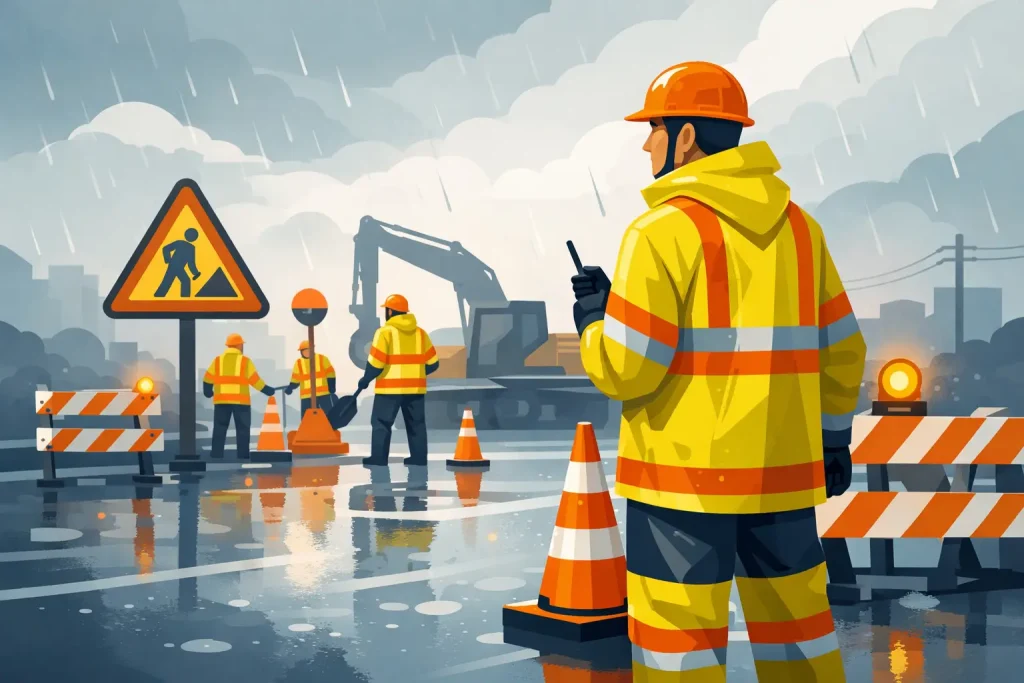
Rain does more than soak a crew. It reduces sightlines, covers reflective details with grime, limits movement, and makes ordinary traffic-control work harder to see. CSA traffic rainwear is built for that combination of weather exposure and worker visibility, but the right garment depends on the work zone, vehicle traffic, shift timing, and hazards already present on site.
For supervisors and buyers, the objective is not simply to issue a yellow rain jacket. The rainwear needs to stay visible in poor light, keep workers reasonably dry through the shift, fit over required layers, and align with the high-visibility requirements identified in the site hazard assessment.
What CSA Traffic Rainwear Needs to Do
High-visibility rainwear used on Canadian worksites is commonly selected to meet CSA Z96 requirements for high-visibility safety apparel. CSA Z96 addresses garment visibility through fluorescent background material and retroreflective striping. It is not a general waterproofing, flame-resistant, or electrical-protection standard.
That distinction matters when rain gear is purchased for a mixed-hazard environment. A waterproof shell can provide rain protection without providing arc flash protection. A high-visibility jacket can meet visibility requirements without being suitable for flash fire exposure. When workers face electrical arc or flash fire hazards, the outer rain layer must be selected as part of the required arc-rated or flame-resistant PPE system, not as an afterthought.
Traffic rainwear also has to perform when it is dirty, moving, and partly covered by tools or equipment. A compliant striping layout is only useful when the garment is worn correctly and remains visible from the directions workers may be approached. That is why the right size, garment length, and use of hoods, harnesses, and tool belts all deserve attention.
Start With the Work Zone, Not the Catalog
The work environment should drive the purchase. A crew working beside moving public traffic at dawn has different visibility needs than a maintenance team walking between parked fleet vehicles. Workers exposed to fast-moving traffic, heavy equipment, or long shifts in rain often need a more substantial high-visibility garment system than staff performing short tasks in a controlled yard.
Match visibility to the assigned task
Confirm the site requirement before choosing a performance class or striping configuration. CSA Z96 uses performance classes and retroreflective material levels, and the required configuration should come from the employer’s hazard assessment, customer specification, or project safety plan.
Class 2 and Class 3 garments are common where workers need to be clearly seen around traffic and mobile equipment, but there is no universal answer for every job. Vehicle speed, background clutter, weather, lighting, worker activity, and whether a worker is directing traffic all affect the decision. Do not substitute a lower-visibility rain jacket because it costs less or is more comfortable if the task calls for greater conspicuity.
Decide how much weather protection is actually needed
Water-resistant and waterproof are not interchangeable. Water-resistant rainwear may handle light showers or short outdoor tasks. For sustained rain, pressure washing, roadside work, or extended shifts, look for waterproof fabric, sealed or taped seams, storm flaps, and closures that limit water entry at the front and cuffs.
More weather protection can mean less breathability. A heavy PVC or polyurethane-coated rain suit may be the practical choice for cold, wet, dirty work, but it can trap heat during physically demanding tasks. Lighter breathable rainwear may improve comfort and reduce sweat buildup, yet it may not hold up as well against abrasion, heavy rain, or frequent kneeling. The job decides the trade-off.
Build a Rainwear System That Workers Will Wear
A jacket alone may be enough for a worker moving between a truck and a building. It is rarely enough for a worker standing in rain for hours, kneeling on wet pavement, or working in roadside ditches. In those conditions, matching high-visibility rain pants, bib pants, or a full rain suit can prevent water from soaking base layers and help the worker stay focused.
Fit is a safety issue. Rainwear should go over the layers required for the season without binding at the shoulders, riding up during overhead work, or leaving the lower back exposed. Oversized garments can snag, catch wind, or interfere with pedals and controls. Garments that are too tight restrict movement and are more likely to be left unfastened.
Check compatibility with the rest of the PPE. A hard hat hood should preserve peripheral vision and sit properly around the head protection. Fall arrest harness straps and lanyards must remain usable as designed. Gloves need to work with cuff closures, and rain pants must not drag under safety boots. If workers wear tool belts or radios, make sure those items do not block significant areas of fluorescent fabric or retroreflective trim.
For crews with varying tasks, it is often more efficient to standardize a core jacket and offer rain pants or bibs as task-specific additions. This controls purchasing while giving employees appropriate protection for the conditions they actually face.
Do Not Confuse Rainwear With FR or Arc Flash PPE
High-visibility rainwear can be part of a compliant workwear program, but it does not automatically meet requirements for flame resistance or electrical arc protection. CSA Z96 addresses high visibility. NFPA 2112 and CAN/CGSB 155.20 address protective workwear for flash fire hazards. NFPA 70E and CSA Z462 address electrical safety and arc flash PPE requirements.
Where an arc flash or flash fire hazard exists, workers need rainwear that is specifically rated and approved for the applicable hazard and is compatible with the complete PPE system. Placing ordinary non-FR rainwear over FR clothing can create a serious problem because the outer layer may ignite, melt, or compromise the protection the worker is expected to have.
Safety managers should document the hazard, the required protective standard, and the approved garment combination. Purchasing teams should verify product specifications rather than assuming that high visibility, waterproofing, and FR protection come together in one garment.
Inspect and Maintain High-Visibility Rain Gear
Rainwear is often used hard and stored poorly. Mud, oil, road salt, concrete dust, and repeated folding can shorten its useful life. Before a shift, workers should check seams, closures, cuffs, reflective striping, and fabric for tears, peeling, punctures, and contamination.
Cleaning instructions matter. Harsh detergents, bleach, high heat, and improper drying can damage waterproof coatings or reduce the appearance of retroreflective material. Follow the garment label, and replace rainwear when its visibility, waterproof integrity, or physical condition is no longer reliable. A torn jacket patched with tape may keep out some rain, but it may not preserve the visibility performance needed in traffic.
For company issue programs, assign sizes, record issue dates, and keep replacement stock available before wet seasons begin. A crew should not have to choose between working wet and wearing the wrong visibility garment because the correct size is out of stock.
Buy for Consistent Crew Use
The lowest unit price is rarely the full cost of rainwear. Gear that leaks early, fits poorly, or creates heat stress gets left in the truck. That creates a visibility and compliance problem when conditions change quickly.
Look for clearly identified CSA Z96 high-visibility specifications, durable construction suited to the work, practical pocket and closure placement, and sizing that accommodates layers. Coverallsale can help simplify purchasing across high-visibility apparel, rain protection, FR clothing, arc flash PPE, and other job-specific workwear, but the final selection should always match the documented hazard assessment.
Common Questions
Is CSA traffic rainwear automatically waterproof?
No. CSA Z96 relates to high-visibility safety apparel, not waterproof performance. Review the product construction for waterproof fabric, taped seams, closure design, and the manufacturer’s stated rain protection features.
What CSA Z96 class is best for roadside workers?
It depends on the roadway, traffic speed, lighting, work activity, and employer or project requirements. Roadside and mobile-equipment work often requires higher-visibility configurations, but the site hazard assessment should determine the required class and striping level.
Can workers wear standard rain gear over FR clothing?
Not when flash fire or arc flash protection is required unless the rainwear is specifically approved as part of the required protective system. Standard rainwear may melt, ignite, or reduce the effectiveness of underlying FR or arc-rated apparel.
When should high-visibility rainwear be replaced?
Replace it when reflective trim is damaged or heavily degraded, fabric is torn, seams leak, closures fail, contamination cannot be removed, or the garment no longer fits and functions correctly. Reliable rainwear is most valuable before the weather and traffic conditions turn against the crew.
