
No products in the cart.
flame-resistant-clothing
How to Inspect FR Coveralls Before Each Shift
15
Jul
Jul
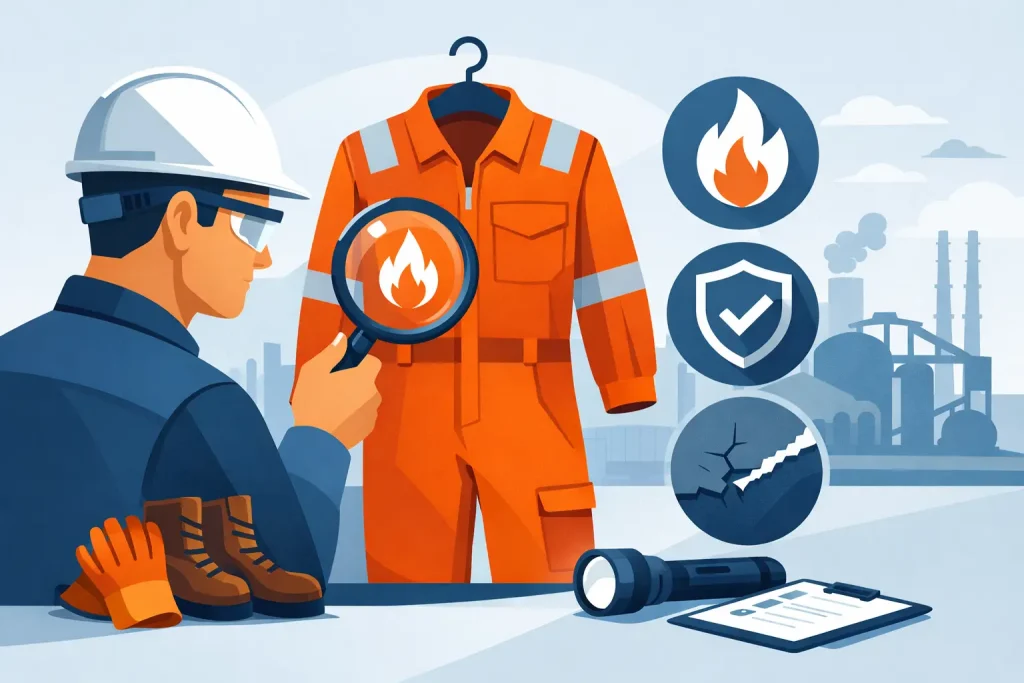
A missing snap, oil-soaked knee, or unreadable arc-rating label can turn a pair of FR coveralls into the weak point in an otherwise sound PPE program. Knowing how to inspect FR coveralls takes only a few minutes before a shift, but it helps workers identify garments that need cleaning, repair, or removal from service before they are exposed to a flash fire or electrical arc hazard.
An inspection of FR Coveralls does not replace the hazard assessment or the employer’s PPE requirements. It does confirm that the coveralls selected for the job are wearable, properly identified, and free from conditions that could reduce protection.
Start With the Garment Label and Required Rating
Check the inside label before looking over the fabric. The label should be present, readable, and appropriate for the hazard. For electrical work, confirm the garment’s arc rating and that it meets the employer’s requirements under an NFPA 70E or CSA Z462 electrical safety program. For flash-fire exposure, review whether the garment is certified to NFPA 2112 or, where applicable, CAN/CGSB 155.20.
These standards are not interchangeable. NFPA 2112 and CAN/CGSB 155.20 address protection from hydrocarbon flash fire, while NFPA 70E and CSA Z462 address workplace electrical safety and arc flash PPE selection. A high-visibility label also does not indicate FR or arc protection. CSA Z96 applies to high-visibility safety apparel, not flame resistance.
If the label is missing, badly faded, or cannot be read, set the coveralls aside until your safety department or garment supplier confirms its identity and rating. Do not assume that a blue coverall, a Nomex garment, or a familiar brand meets the required level of protection.
How to Inspect FR Coveralls From Top to Bottom
Lay the coveralls flat in good light or hang them where you can see the full garment. A consistent top-to-bottom check prevents missed areas and makes pre-shift inspections faster for crews.
Look closely at these points:
- Collar, cuffs, and ankle closures: Check for torn fabric, broken snaps, damaged zippers, missing hook-and-loop closures, and cuffs that no longer close securely.
- Front closure and storm flap: Run the zipper from bottom to top. It should move freely and stay closed. A failed zipper or broken closure can leave an opening where the garment is intended to provide continuous coverage.
- Seams and stress points: Inspect the shoulders, underarms, crotch, knees, pockets, and seat for loose stitching, split seams, holes, thinning fabric, or worn patches.
- Fabric surface: Look for burns, melted areas, heat glazing, abrasion, fraying, cuts, snags, and discoloration. Pay attention to sleeves, knees, and areas that contact tools, piping, machinery, or hot surfaces.
- Reflective trim and added components: If the coveralls include high-visibility material, inspect the striping for peeling, cracking, or severe wear. Verify that any patches, logos, repairs, or sewn-on items are approved for use on FR garments.
Small defects deserve attention. A pinhole in a low-wear area may be repairable under the garment manufacturer’s instructions. A burn hole, melted spot, or fabric that has become thin or stiff may require the garment to be removed from service. The decision depends on the garment construction, the hazard level, and the employer’s written PPE policy.
Watch for Melted or Heat-Damaged Material
FR fabrics are designed to resist ignition and limit flame spread. That does not mean they are immune to damage. Exposure to heat, sparks, or molten material can leave areas that are brittle, hard, shiny, fused, or visibly distorted. Those conditions can affect the garment’s integrity even when there is no large hole.
Do not wear coveralls with melted synthetic contamination, fused trim, or heat-damaged fabric into a flash-fire or arc-flash environment. Remove them from use and follow site procedures for evaluation or replacement.
Check for Oil, Grease, Solvents, and Other Contamination
Contamination is one of the most common reasons an FR garment should not go straight back into service. Look and smell for petroleum products, grease, hydraulic fluid, paints, solvents, flammable liquids, and heavy chemical residue. Check the front of the legs, cuffs, pockets, abdomen, and sleeves, where contact is most likely.
FR fabric can retain its flame-resistant properties after proper laundering, but flammable soil on the garment creates an additional fuel source. Coveralls that are visibly soiled with oil or fuel should be removed and cleaned according to the care label and workplace procedure before reuse. If the contamination cannot be removed, retire the garment.
Do not use bleach, fabric softener, starch, or unauthorized home remedies to clean FR workwear. These products can leave residues or interfere with garment performance. Follow the manufacturer’s laundering instructions, including washing temperature, detergent guidance, drying method, and any limits on industrial laundering.
Chemical contamination requires additional judgment. Some chemicals may damage fibers without obvious visual signs, while others may require immediate decontamination procedures. When the substance is unknown or the exposure is significant, do not rely on a standard wash cycle. Escalate the garment to the supervisor or safety team.
Confirm Proper Fit and Full Coverage
A clean, undamaged coverall still needs to fit correctly. Have the wearer move through normal working positions: reach overhead, bend, squat, climb, and extend both arms. The garment should allow movement without pulling open at the front, exposing the wrists or ankles, or placing excessive strain on seams.
FR coveralls should be worn as intended by the manufacturer and employer policy, typically with the front fully closed and sleeves down. Loose fabric can create snag hazards around moving equipment, while a garment that is too tight can restrict movement and wear out quickly at stress points. Oversized coveralls may also interfere with fall protection harnesses, gloves, respirators, or other required PPE.
Check what is worn underneath. Non-FR synthetic layers can melt when exposed to heat. Layering requirements depend on the hazard assessment, the coverall’s arc rating, and the job. Workers should not add clothing, patches, or accessories that conflict with the site’s FR and arc-flash PPE rules.
Know When Repair Is Acceptable
Not every damaged coverall needs to be discarded. Minor seam repairs or approved patches may be acceptable when completed with compatible materials and methods specified by the garment manufacturer or the employer’s FR program. A repair must not compromise coverage, create an ignition concern, or conceal damage that is more extensive than it first appears.
Avoid field repairs with ordinary thread, non-FR fabric, duct tape, adhesive patches, or heat-applied materials unless they are specifically approved for that garment. These shortcuts may introduce materials that melt, burn, or fail under exposure. They can also make it difficult to verify the original garment’s condition.
For purchasing teams, a clear repair-versus-replace rule reduces inconsistent decisions across crews. Coveralls with major tears, missing labels, failed closures, severe contamination, melted fabric, or repeated repairs are usually better replaced than repeatedly patched.
Build the Inspection Into the Work Routine
The most effective inspection process is simple enough to happen every day. Workers should check coveralls before putting them on, after any exposure event, and after laundering. Supervisors can reinforce the process through tailgate meetings, PPE issue records, and spot checks at shift start.
For larger operations, keep replacement coveralls available in the sizes and ratings the crew actually uses. A worker is more likely to remove a defective garment from service when a compliant replacement is ready. This also helps avoid the common mistake of wearing the wrong garment because it is the only one available.
Inspection records do not need to be complicated unless the site’s program requires formal documentation. What matters is that workers know what to look for, understand when a garment is no longer acceptable, and have a direct path to get it cleaned, repaired, or replaced.
Common Questions
How often should FR coveralls be inspected?
Inspect FR coveralls before each shift, after laundering, and immediately after exposure to flames, sparks, chemicals, fuel, or a potential arc-flash event. High-wear jobs may justify additional checks during the shift.
Can FR coveralls be worn if they have a small hole?
It depends on the hole, its location, the required protection level, and the manufacturer’s repair guidance. A small defect may be repairable, but burned, melted, or heavily worn fabric should be removed from service rather than treated as a simple patch job.
Does washing remove flame resistance from FR coveralls?
Proper laundering should not remove the protection from inherently FR fabrics, and treated FR garments can also remain protective when washed according to their care instructions. Incorrect chemicals, fabric softeners, bleach, or unremoved flammable contamination can create problems, so follow the label every time.
Is an arc-rated coverall automatically certified for flash fire?
No. Arc-rated clothing is selected for electrical arc-flash hazards under programs such as NFPA 70E or CSA Z462. Flash-fire protection is addressed by standards such as NFPA 2112 or CAN/CGSB 155.20. Confirm the garment label against the hazard assessment instead of assuming one rating covers every exposure.
What should a worker do with questionable FR coveralls?
Remove the garment from service, identify the concern, and bring it to the supervisor, PPE coordinator, or laundry program for review. Replacing a questionable coverall before the shift is a practical decision that keeps PPE requirements clear and workers ready for the work ahead.
