
No products in the cart.
Arc Flash Protection
Arc Flash PPE Guide for Safer Electrical Work
12
Jul
Jul
This arc flash PPE guide is built for the decision that matters before work starts: selecting a complete, properly rated system for the actual hazard, not simply wearing an FR shirt and hoping it is enough. An energized electrical task can expose a worker to extreme heat, pressure, molten metal, and intense light in a fraction of a second.
Arc flash protection is not a one-garment purchase. The equipment must match the incident energy or the applicable PPE category identified by the site’s electrical safety program. It also has to fit the work, allow necessary movement, and be worn correctly throughout the exposure.
Start With the Arc Flash Assessment
Arc flash PPE selection begins with the electrical hazard assessment. A qualified person or engineering study determines the available incident energy at the working distance, establishes the arc flash boundary, and identifies the required level of protection. Equipment labels should provide the information workers need at the point of use.
Where an incident energy analysis is not available, some tasks may be assessed using PPE category tables under NFPA 70E or CSA Z462, provided every condition and limitation in the table is met. Those tables are not a shortcut for guessing. Equipment condition, fault current, clearing time, voltage, enclosure type, and task parameters all affect whether a table method applies.
The core number on arc-rated apparel is the arc rating, stated in cal/cm². This rating may be an ATPV, meaning Arc Thermal Performance Value, or an EBT, meaning Energy Breakopen Threshold. Either value indicates the tested energy level the fabric system can withstand under the applicable test method. The PPE system must have an arc rating at least equal to the calculated incident energy or required category level.
Do not confuse arc flash protection with flash fire protection. NFPA 70E and CSA Z462 address electrical workplace safety and arc flash risk. NFPA 2112 addresses flame-resistant garments for industrial personnel exposed to flash fire. CAN/CGSB 155.20 addresses workwear protection against hydrocarbon flash fire, with optional protection from steam and hot fluids. A garment may carry more than one certification, but one standard does not automatically satisfy the requirements of another hazard.
Build a Complete Arc Flash PPE System
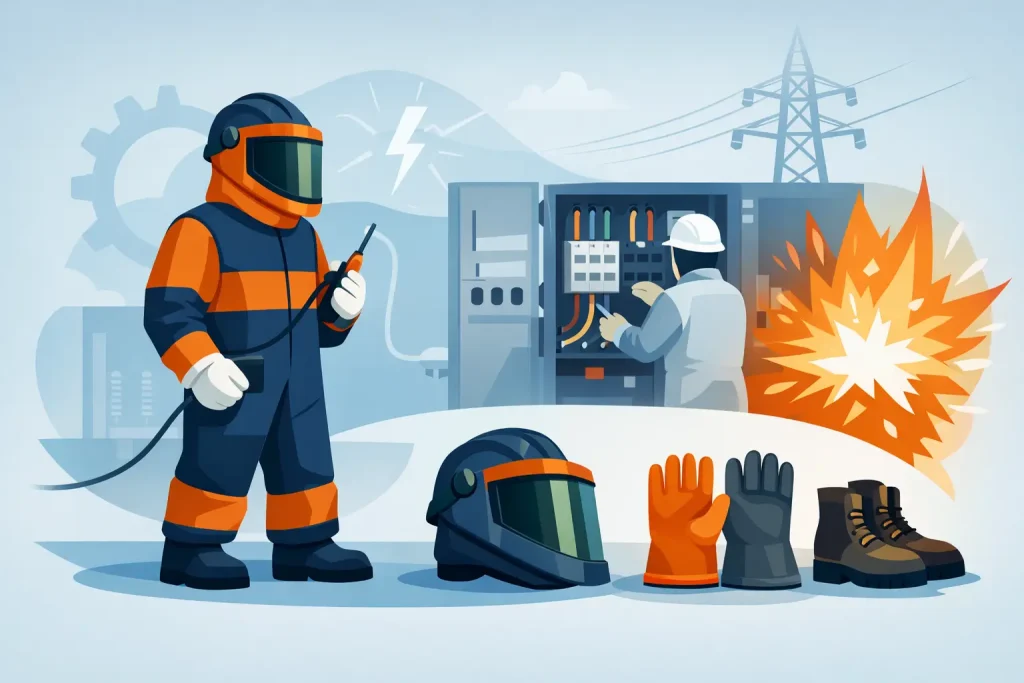
The required PPE depends on the task and the assessed energy. For lower-energy work, the system may include arc-rated daily wear with appropriate head, eye, hearing, and hand protection. Higher-energy exposure may require an arc flash suit, arc-rated hood, and additional protective components. The label on a garment is only one part of the answer.
Arc-Rated Clothing and Layering
Arc-rated shirts, pants, coveralls, and bib overalls are commonly used as daily workwear where electrical exposure is part of the job. The garment should have a visible arc rating and be selected in a style that covers the body areas exposed during the task. Long sleeves, full-length pants, and proper closures are basic requirements when arc-rated apparel is called for.
Layering can increase protection, but it must be planned. The total arc rating of a tested layered system may exceed that of either individual garment. However, workers should not assume that any two FR garments create a predictable combined rating. Review manufacturer information, garment labels, and the employer’s program before relying on layered protection.
Non-melting underlayers matter. Untreated polyester, nylon, acetate, and similar meltable fibers can melt onto skin during an arc event. Cotton or other non-melting undergarments are generally the safer choice beneath arc-rated outerwear, unless the employer specifies a tested clothing system. Clothing must also be dry and free from flammable contamination such as oils, solvents, or grease.
Face, Head, and Hearing Protection
An arc-rated face shield is not interchangeable with ordinary impact eye protection. For tasks where a face shield is permitted, it must have an arc rating adequate for the exposure and be paired with safety glasses or goggles as required by the program. A balaclava or arc-rated hood may also be necessary to protect the neck, ears, and other exposed areas.
For higher incident energy, an arc flash hood and suit system may be required. Check the hood’s arc rating, visibility condition, closure system, and compatibility with the rest of the suit. A scratched or clouded viewing window can affect both visibility and a worker’s willingness to keep the hood properly positioned.
Hearing protection is frequently overlooked. Arc blast can create a damaging pressure wave and high noise level, so insert earplugs are commonly required during exposure to an arc flash hazard. Head protection must also meet the applicable industrial head protection requirements for the work area. An arc-rated hard hat liner or hood does not replace a hard hat where head protection is required.
Hand and Foot Protection
Arc-rated gloves protect against thermal exposure, but they are not automatically rated for electrical shock protection. When workers may contact energized conductors or circuit parts, voltage-rated rubber insulating gloves are selected based on the voltage and must be inspected, tested, and used with leather protectors as required. The task may require both shock protection and arc flash protection at the same time.
Footwear should provide durable coverage and meet the worksite’s requirements. Leather work boots are generally preferred for arc flash exposure because they do not melt like many synthetic materials. Do not treat electrical hazard-rated footwear as shock protection for energized electrical work. It has a different purpose and does not replace rubber insulating gloves, insulating tools, or required work practices.
Use the Label, Then Verify the Fit
A compliant garment that is too small, damaged, or worn incorrectly cannot provide the intended protection. Arc-rated shirts should remain tucked in where required, cuffs should be secured, and coveralls should be fully closed. Avoid rolled sleeves, open collars, and exposed layers that create a path for heat or molten material to reach the skin.
Sizing deserves practical attention. Arc flash suits and hoods need enough room to move, climb, operate equipment, and wear required layers without restricting vision or dexterity. Excessively loose clothing can snag, while overly tight garments may reduce the insulating air space and make the work harder to perform safely. For crew purchases, provide a size range and allow workers to confirm fit before issuing gear for field use.
Inspect PPE before use. Remove arc-rated clothing from service if it has holes, tears, damaged closures, heavy contamination, or repairs that are not approved for the garment. Inspect face shields and hood windows for cracks, scratches, and degraded visibility. Rubber insulating gloves require their own inspection and testing controls, including air testing before use where applicable.
Laundering and Care Affect Protection
Arc-rated apparel is workwear, not disposable clothing. Follow the manufacturer’s laundering instructions and avoid bleach, fabric softeners, and other products that can leave flammable residues or affect garment performance. Industrial laundering may be appropriate for larger programs, especially where contamination control and consistent handling are priorities.
Do not repair garments with ordinary meltable patches, thread, or heat-applied materials unless the repair method is approved. The same caution applies to logos, name patches, and alterations. A garment can lose practical protection when an unapproved addition creates a weak point in an otherwise arc-rated system.
Purchasing Arc Flash PPE for a Crew
For supervisors and purchasing teams, standardization reduces mistakes. Start by separating jobs according to their documented arc flash exposure, then define approved garment types, minimum arc ratings, and required accessories for each role. Keep shock protection requirements separate from arc flash clothing requirements so workers receive the right equipment for both hazards.
A useful issue program records garment brand, style, size, arc rating, date issued, inspection status, and replacement history. This helps control cost without extending the service life of damaged PPE. Coverallsale can support buyers sourcing arc-rated clothing alongside high-visibility workwear, rainwear, respirators, fall protection, and daily uniform needs, but each item should still be selected for its specific workplace hazard.
The safest purchase is not always the highest-rated or most expensive garment. Higher protection can mean more weight, bulk, and heat stress. The right choice is the PPE level required by the hazard assessment, combined with training, safe work practices, and a plan to de-energize whenever the work can be performed that way.
Common Questions
Is FR clothing the same as arc-rated clothing?
No. FR describes clothing designed to resist ignition and self-extinguish when the ignition source is removed. Arc-rated clothing has been tested for protection from arc flash thermal exposure and carries an arc rating in cal/cm². For arc flash work, look for the required arc rating, not just an FR claim.
Can workers wear two arc-rated garments to increase protection?
Sometimes, but only when the layered combination is documented or evaluated as part of the PPE program. Layering can increase protection, yet the resulting performance cannot be assumed by adding label numbers from unrelated garments.
Does an arc-rated face shield replace an arc flash hood?
It depends on the incident energy and the employer’s PPE requirements. A face shield may be acceptable for some lower-energy exposures when used with the required balaclava and eye protection. Higher-energy tasks generally require a properly rated arc flash hood and suit system.
Are voltage-rated gloves required for every arc flash task?
No. Voltage-rated rubber insulating gloves address electrical shock hazard, while arc-rated gloves address thermal arc exposure. If the task involves possible contact with energized parts, shock protection may be required in addition to arc flash PPE.
What is the most practical way to reduce arc flash PPE requirements?
De-energize the equipment, establish electrically safe work conditions, and verify absence of voltage using approved procedures whenever the work allows it. PPE is a last line of defense, not a substitute for safer electrical work planning.
