
No products in the cart.
Industrial Workwear
How to Choose a Fall Protection Harness
04
Jul
Jul
A harness that looks fine on the shelf can turn into a problem fast once the worker is on steel, in a lift, or climbing all day. If you are figuring out how to choose fall protection harness equipment, the right answer starts with the job itself, not just the price tag or brand name. A good harness has to match the task, the anchor setup, the user’s body size, and the work environment without creating new risks through poor fit or unnecessary features.
For crews and buyers, that usually means separating what is required from what is merely available. Some harnesses are built for straightforward fall arrest on general construction sites. Others are designed for tower work, ladder climbing, confined space entry, positioning, or suspension. When the harness does not match the application, workers either lose mobility or end up using equipment in ways it was not intended for.
How to Choose Fall Protection Harness for the Actual Job
Start with the type of work being performed. That sounds obvious, but it is where many purchasing mistakes begin. A worker installing roofing panels, a utility technician climbing structures, and a maintenance crew entering a tank do not need the same harness configuration.
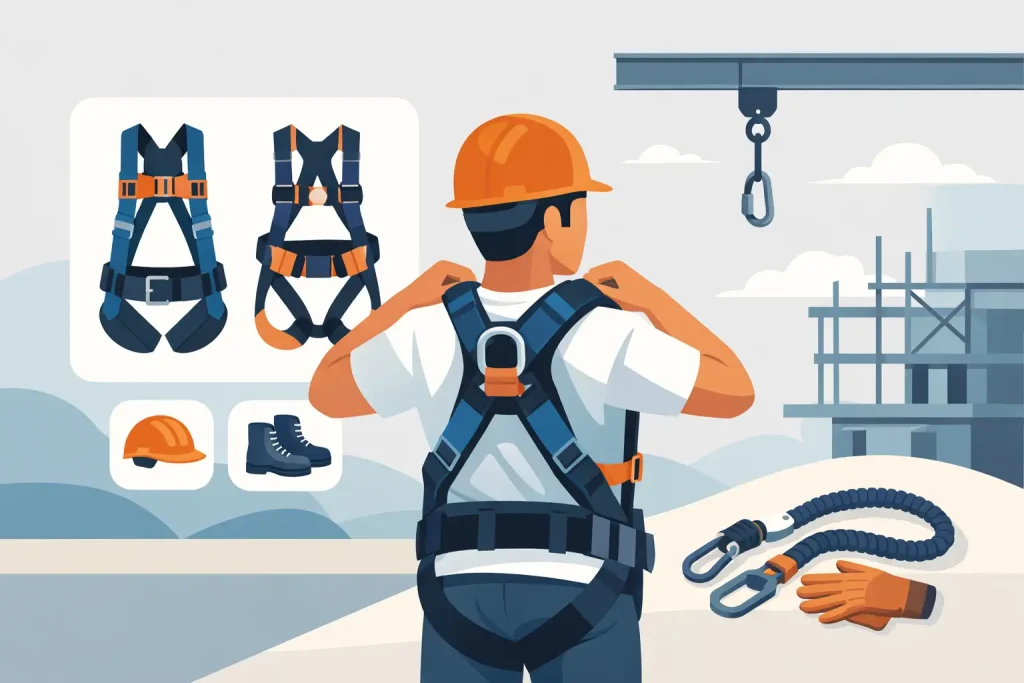
If the main hazard is a potential fall from height, a standard full-body harness with a dorsal D-ring for fall arrest may be the correct starting point. If the worker also needs to maintain a supported working position with both hands free, side D-rings for positioning may be necessary. If the job includes rescue planning or confined space entry, shoulder D-rings can matter. For ladder climbing systems, a sternal attachment point may be part of the required setup.
This is where buyers should resist overbuying. More D-rings and attachments are not always better. Extra hardware adds weight, bulk, and more room for misuse. If the worker will never use side or shoulder D-rings, a simpler harness is often the better operational choice.
Match the Harness to the Fall Protection System
A harness is only one part of the system. It has to work with the lanyard, self-retracting lifeline, anchor point, and connector hardware being used on site. That means the selection process cannot happen in isolation.
Before buying, confirm the connection method and anchorage location. A harness chosen for overhead tie-off may feel very different in practice if the crew is regularly tying off at foot level, where equipment selection becomes more restrictive and fall clearance calculations become more demanding. The harness does not solve those issues by itself, but it needs to be compatible with the system designed for that exposure.
Safety managers should also verify whether the task calls for fall arrest, travel restraint, work positioning, or rescue support. Those are different functions. A harness suitable for one may not be suitable for all without the right attachment points and compatible components.
Fit Is Not Optional
The fastest way to make a harness unsafe is to accept a poor fit. A full-body harness needs to distribute forces correctly in the event of a fall. If it is too loose, straps can shift, the worker can slip partially out of position, and the arrest forces may load the body incorrectly. If it is too tight, workers loosen it during the shift or stop wearing it properly.
Chest, leg, and shoulder adjustment all matter. The harness should sit snugly without restricting normal movement. The dorsal D-ring should rest between the shoulder blades, not too high at the neck and not too low on the back. Leg straps should be secure but not cutting into the worker during climbing, kneeling, or extended wear.
For larger crews, size range matters just as much as individual fit. One-size-fits-all is convenient for inventory, but it is not always practical in the field. If you are outfitting multiple workers, check the available size range and adjustment capacity before standardizing on one model.
Consider Body Type, Layers, and Climate
Fit changes with the season and the task. A harness worn over a T-shirt in summer may fit very differently over insulated FR outerwear in winter. If your crews work in changing temperatures or across indoor and outdoor environments, account for layering when selecting harness sizes and adjustment ranges.
This is especially relevant on industrial sites where workers may already be wearing arc flash PPE, flame-resistant clothing, high-visibility outerwear, or rain gear. The harness must fit over the required clothing without interfering with movement or making buckle adjustment difficult. The cleanest-looking option on paper is not always the most workable one on site.
Comfort Affects Compliance
Workers are more likely to wear gear correctly when it is comfortable enough for a full shift. That does not mean selecting the softest or most padded harness available. It means paying attention to the kind of comfort that reduces friction in actual use.
Padding at the shoulders, back, and legs can make a difference for workers who wear harnesses for long periods. Breathable materials may help in hot environments. Quick-connect buckles can speed up donning and adjustment, especially for crews who gear up repeatedly throughout the day. Tool rings and belt options can also be useful, but only when they support the task and do not create snag hazards.
There is always a trade-off. More padding and accessories can improve wearability, but they also add weight and complexity. For intermittent use, a simpler harness may be the better buy. For daily at-height work, comfort features often pay off through better worker acceptance and more consistent use.
Check Ratings, Labels, and Compliance Information
When evaluating any harness, look closely at the product labeling and technical information. A legitimate fall protection harness should clearly identify applicable standards, rated capacities, model details, and inspection requirements. If that information is vague or hard to verify, move on.
For North American buyers, compliance requirements should align with your site policies and regulatory environment. Do not assume that all harnesses on the market are equivalent just because they appear similar in photos. Hardware style, webbing strength, attachment configuration, and labeling quality can vary significantly.
Inspection requirements also need attention at the purchasing stage. The harness should have clear markings and a structure that allows workers or competent persons to inspect webbing, stitching, buckles, and D-rings without guesswork. If inspection is difficult, field compliance usually suffers.
Durability Matters in Harsh Environments
A warehouse mezzanine, a bridge project, and an oil and gas site do not expose equipment to the same conditions. Dirt, grease, welding exposure, moisture, abrasion, and UV can all shorten service life. In those environments, harness material quality and hardware finish matter.
Buyers should think beyond the first issue date. If a lower-cost harness wears out quickly, gets contaminated easily, or becomes stiff and uncomfortable after repeated use, it may cost more over time than a better-built option. Procurement decisions should account for service life, replacement cycle, and the realities of the jobsite.
Do Not Ignore Training and Rescue Planning
Even the right harness can be used incorrectly. That is why harness selection should always be tied to training, inspection routines, and a rescue plan. Workers need to know how to adjust the harness, connect properly, inspect before use, and recognize when equipment must be removed from service.
Rescue planning deserves more attention than it often gets. After a fall, suspension time becomes a serious issue. A harness should support the rescue method your site has in place, whether that involves self-rescue, assisted rescue, or retrieval by a trained team. Buying a harness without considering post-fall recovery is an incomplete decision.
For purchasing teams, this means talking with the people responsible for safety procedures before placing a bulk order. The most efficient order is not always the most effective one if the gear does not fit the training program or rescue setup already in use.
A Practical Buying Approach for Crews and Supervisors
If you need a workable process for how to choose fall protection harness models across a crew, start by grouping workers by task, not by department name. Identify who needs basic fall arrest, who needs positioning, who needs climbing or confined space features, and who only uses a harness occasionally.
Then narrow the selection based on fit range, compatibility with existing connectors and lanyards, and expected wear time. After that, compare durability and comfort details. This approach keeps the decision grounded in use case rather than in catalog clutter.
For many teams, the best result is not one universal harness. It is a small number of harness types chosen to cover distinct work profiles without making stocking or training overly complicated. Suppliers that understand industrial PPE categories can help simplify that process, especially when buyers are sourcing fall protection alongside FR apparel, high-visibility clothing, and other compliance-driven gear.
Common Questions
What type of harness is required for most construction work?
For general fall arrest applications, a full-body harness with a dorsal D-ring is the standard starting point. If the work also involves positioning, ladder systems, or confined space entry, additional attachment points may be required.
How tight should a fall protection harness fit?
It should be snug enough to stay in place during work and in a fall, but not so tight that it restricts movement or circulation. The worker should be able to move normally without loose straps hanging or shifting excessively.
Can one harness be shared by multiple workers?
It can be, but it is not always ideal. Shared harnesses require careful size adjustment, consistent inspection, and attention to hygiene and wear. For frequent use, individually assigned harnesses are usually easier to manage.
When should a fall protection harness be replaced?
Replace it immediately if it has arrested a fall, fails inspection, shows damaged webbing or stitching, has deformed hardware, or no longer has legible labels. Manufacturer guidance and site policy should also be followed.
A harness should make safe work more workable, not more complicated. When the selection is based on the task, fit, compatibility, and real field conditions, crews are in a much better position to use it correctly every time.
