
No products in the cart.
Uncategorized
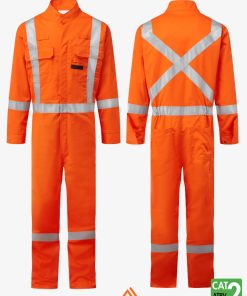
Where Can I Find CAT 2 FR High-Vis Coveralls
In industries where the margin for error is razor-thin—like oil and gas, electrical utilities, or heavy manufacturing—your gear isn’t just a uniform; it’s your first line of defense. When the risk of flash fire or arc flash is present, “standard” workwear simply doesn’t cut it.
Enter the CAT 2 High-Visibility Flame Resistant (FR) Coverall. It’s the Swiss Army knife of PPE, combining thermal protection, nighttime visibility, and all-day durability.
- What Does “CAT 2” Actually Mean?
- The Power of “High-Vis” Integration
- Understanding the Dual Protection of CAT 2 FR High-Vis Coveralls
- FAQ’s For CAT 2 FR High-Vis Coveralls
1. What Does “CAT 2” Actually Mean?
In the world of safety standards (specifically NFPA 70E), Category 2 (CAT 2) is a critical benchmark. It means the garment has a Minimum Arc Thermal Performance Value (ATPV) of $8 \text{ cal/cm}^2$.
While CAT 1 is for low-risk environments, CAT 2 is the industry standard for most daily electrical tasks. It provides a robust shield against burns while remaining lightweight enough for a full shift of manual labor.
2. The Power of “High-Vis” Integration
Working in a high-risk zone often means working around moving vehicles or in low-light conditions. These coveralls feature integrated reflective strips (usually in a 2-inch silver pattern) that ensure you’re seen from 360 degrees.
- Daytime: Fluorescent fabrics stand out against industrial backgrounds.
- Nighttime: Reflective tape bounces light back to equipment operators.
3. Key Features to Look For
Not all coveralls are created equal. If you’re sourcing gear for a team, keep these “must-haves” in mind:
| Feature | Why It Matters |
| Action Back | Allows for a full range of motion without the fabric “tugging.” |
| Breakaway Zippers | Essential for quick removal in emergency situations. |
| Breathable Blends | Look for cotton-rich FR blends to prevent heat exhaustion. |
| Reinforced Pockets | CAT 2 gear should have plenty of storage for tools and meters. |
The Bottom Line: Investing in CAT 2 FR High-Vis coveralls isn’t just about compliance with OSHA or NFPA—it’s about peace of mind. It’s about knowing that if the worst happens, your gear is engineered to self-extinguish and keep you visible.
Stay Safe, Stay Visible
Ready to upgrade your fleet’s safety standards? Ensure your gear is dual-certified for both flame resistance NFPA 2112 and high-visibility CSA Z96-22 to get the most protection for your investment.
Understanding the Dual Protection of CAT 2 FR High-Vis Coveralls
In hazardous work environments, safety gear must address multiple threats simultaneously. The CAT 2 FR High-Vis coverall is engineered for workers who face the combined risks of electrical arc flashes, flash fires, and low-visibility conditions.
1. Beyond the Basics: The CAT 2 Rating
The “CAT” (Category) system comes from NFPA 70E, the standard for electrical safety in the workplace. A CAT 2 rating is often the “sweet spot” for industrial professionals. It requires a minimum Arc Thermal Performance Value (ATPV) of 8 cal/cm². This means the fabric is thick enough to prevent second-degree burns during a common arc flash incident, yet remains breathable enough for manual labor in varying climates.
2. High-Visibility: More Than Just Bright Colors
High-visibility (High-Vis) standards like CSA Z96 in Canada or ANSI/ISEA 107 in the US dictate exactly how much fluorescent background material and retroreflective tape must be used.
- Fluorescent Material: Essential for daytime visibility, helping a worker stand out against complex industrial backgrounds.
- Reflective Tape: Vital for nighttime or low-light safety, reflecting light from vehicle headlights or equipment lamps back to the operator.
3. The “FR” Factor: Why It Can’t Be Ordinary High-Vis
Standard high-vis vests are often made of polyester, which is essentially plastic. In the event of an arc flash or fire, polyester will melt onto the skin, causing devastating injuries. FR (Flame-Resistant) coveralls are made from treated cotton or inherently flame-resistant fibers (like Nomex or Modacrylic) that self-extinguish and will not melt or drip.
Frequently Asked Questions (FAQ)
Q: Can I wear a standard high-vis vest over my FR coveralls?
A: No, unless the vest is also FR-rated. Wearing a non-FR polyester vest over FR clothing creates a safety hazard, as the vest can melt and ignite, compromising the protection of the garment underneath.
Q: What is the difference between CAT 1 and CAT 2 coveralls?
A: The primary difference is the level of protection. CAT 1 requires an ATPV of at least 4 cal/cm², while CAT 2 requires at least 8 cal/cm². CAT 2 is the most common requirement for daily electrical work and provides a higher safety margin.
Q: How should I wash my FR High-Vis coveralls?
A: Follow the manufacturer’s label strictly. Generally, you should avoid chlorine bleach and fabric softeners, as these can degrade the flame-resistant treatment and dull the high-visibility reflective tape. Always wash them separately from non-FR clothing to avoid lint contamination.
Q: Do these coveralls protect against chemical splashes?
A: Standard FR coveralls are designed for thermal protection, not chemical resistance. If you are working with hazardous chemicals, you may need a specialized “primary” protective garment or an FR-rated chemical suit.
Q: How do I know if my coveralls need to be replaced?
A: Inspect your gear regularly. You should replace coveralls if they have:
- Unrepairable holes or tears.
- Persistent stains from flammable substances (like oil or grease) that cannot be washed out.
- Frayed or damaged reflective tape that no longer bounces light effectively.
- Thinning fabric from excessive wear.
Q: Are CAT 2 coveralls suitable for winter use?
A: Yes, but you should look for insulated versions or layer them with FR-rated base layers. Ensure that any outerwear used is also FR-rated and maintains the necessary CAT 2 protection levels.
