
No products in the cart.
Uncategorized
Can you provide me with a temperature rating for FR parkas?
❄️ The “Real” Temperature Rating: Why Your Jacket Doesn’t Have a Number
If you’ve ever looked at a piece of high-end industrial gear like the Atlas 21912OR and wondered why there isn’t a “Comfort Rated to -30°C” tag on it, you aren’t alone. It seems like a simple question, but the answer is actually a bit more personal than most people think.
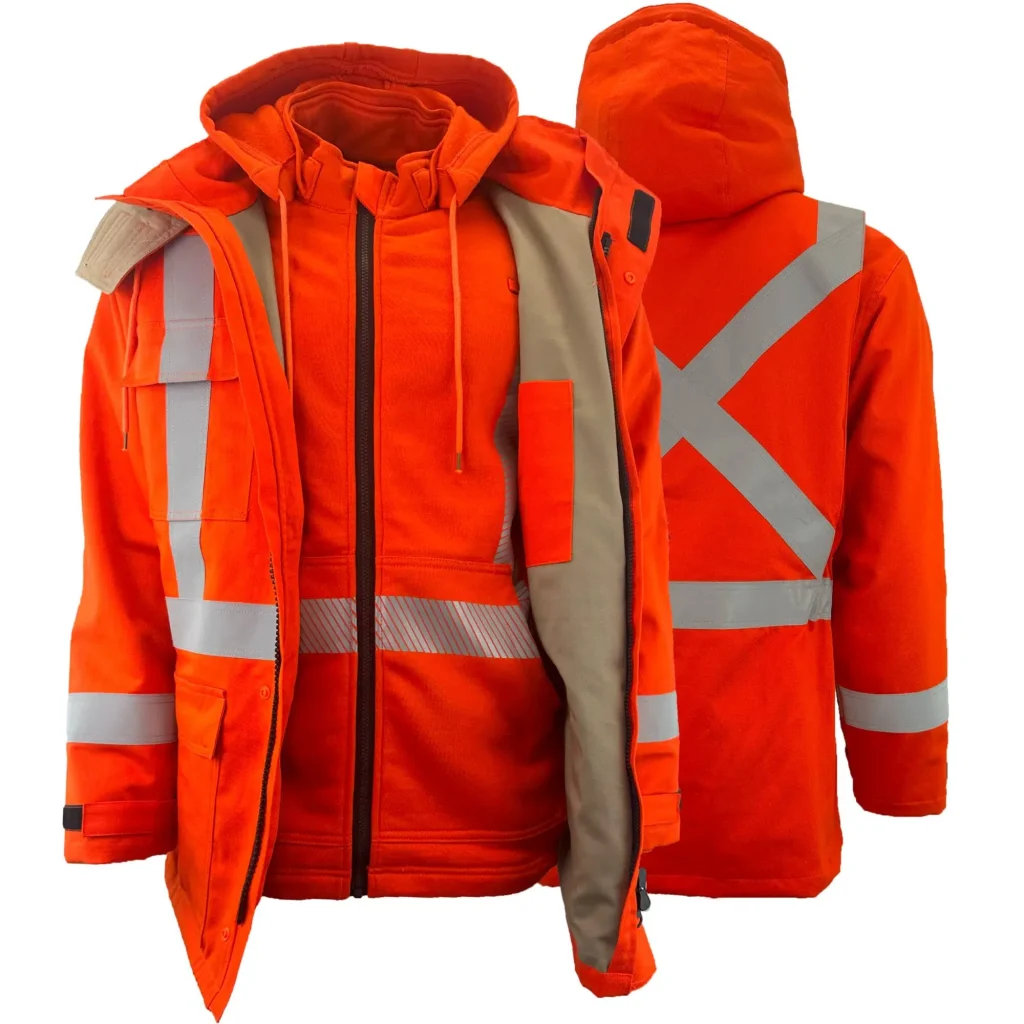
Why Manufacturers Stay Quiet on Degrees
The truth is, manufacturers don’t give out specific temperature ratings because “cold” is subjective. How you feel at -15°C depends on two big factors:
- Your Metabolism: Some of us are human furnaces; others feel the chill the moment the sun goes behind a cloud.
- The Physicality Factor: Are you standing on a lift for four hours, or are you hauling gear and staying active? A physically demanding job generates massive amounts of internal body heat, making a heavy jacket feel like a sauna.
Doing the “Insulation Math”
Instead of a temperature number, the best way to judge a jacket’s warmth is by the weight of the lining. Here is how the Atlas Guardian system stacks up:
- The Shell (21912OR): This features a 7.5 oz lining. On its own, it’s a solid mid-weight layer—great for wind protection and moderate cold.
- The 3-in-1 Upgrade: When you add the FR fleece hoodie, you’re adding another 7.5 oz liner.
- The Total: That brings your setup to a combined 15 oz of insulation.
How Cold is “Extreme Cold”?
To put that 15 oz into perspective, most industrial jackets designed specifically for “extreme cold” usually feature about 14 oz of insulation. Those jackets are generally considered effective for -20°C—and can handle even deeper freezes if you’re moving around and keeping your heart rate up.
By hitting the 15 oz mark with the 3-in-1 system, you’re actually exceeding the insulation weight of many dedicated “arctic” parkas, while maintaining the flexibility to strip layers off if the work gets too intense.
The Bottom Line: If you’re heading into a Canadian winter, don’t just look for a number on a tag—look at the weight. At 15 oz, you’re more than ready for the deep freeze.
When reviewing their specific posts or products (like the IFR Avenger or Bulwark Insulated Parka), check for these details:
- Insulation Type: Look for Modacrylic or FR Treated Cotton linings. Modacrylic is preferred for its high warmth-to-weight ratio and inherent fire resistance.
- Wind/Vapour Barriers: A “vapor barrier” is crucial for Canadian winters as it prevents wind chill from penetrating the FR shell, which is more important than the insulation thickness in high-wind environments (like Alberta or the Territories).
- Outer Shell: Usually 88% Cotton / 12% Nylon (often called “88/12”), which provides a balance of comfort and durability.
